For banking final rounds, prepare one accurate account of each internship or project, then vary the detail to answer the question. Dates, responsibilities, number definitions and known outcomes must remain consistent. A technical interviewer may need your calculation; a teamwork interviewer may need the handoff behind it. Both should hear an account that agrees with your application and with what you actually did.
September 2026 is already part of the 2027 recruiting cycle. Goldman Sachs' Asia-Pacific Summer Analyst page lists an October 4, 2026 close and rolling application review. Its campus preparation page describes several final-round interviews, with the number depending on division. Your actual posting and invitation control the available location and interview format. 2027 Asia-Pacific program, Goldman Sachs interview preparation.
The risk is a changing claim, even when each answer sounds plausible
A candidate can rehearse three individually polished answers and still create a contradiction. “I updated the analysis” becomes “I chose the financing recommendation” in a motivation answer. A number describing bonds in a worksheet becomes the company's entire debt balance in a technical answer. The wording has changed the claimed work.
JPMorganChase's hiring guide asks for accomplishments with measurable data where applicable and describes meeting several people over multiple rounds, with processes varying by position. That supports preparing concrete examples; it does not tell us that every interviewer receives the same notes or follows a particular scoring procedure. JPMorganChase hiring guide.
Prepare for consistency because it makes your answers accurate and intelligible. You do not need to speculate about how interviewers compare feedback.
Establish the facts before writing three answers
Take the application version already submitted. For one substantial experience, write down the facts that would remain true however the interviewer approached it.
| Fact to establish | What to record |
|---|---|
| Timing | Internship dates and when this particular task happened |
| Assignment | Who requested the work and what decision it supported |
| Your contribution | What you produced, checked or proposed yourself |
| Decision authority | Who approved assumptions, conclusions and external use |
| Numbers | Currency, measurement date, scope and whether actual or forecast |
| Outcome | What was delivered or used, and what remains unknown |
Check these against material you are permitted to consult. Do not retain or disclose restricted employer documents for interview preparation. If a detail cannot be established, qualify or remove it instead of making the answer more precise than your memory allows.
This exercise also separates two statements that are often compressed together: completing a piece of work and causing a business result. You may know the analyst used your schedule without knowing whether it influenced a client decision.
Follow one internship through three conversations
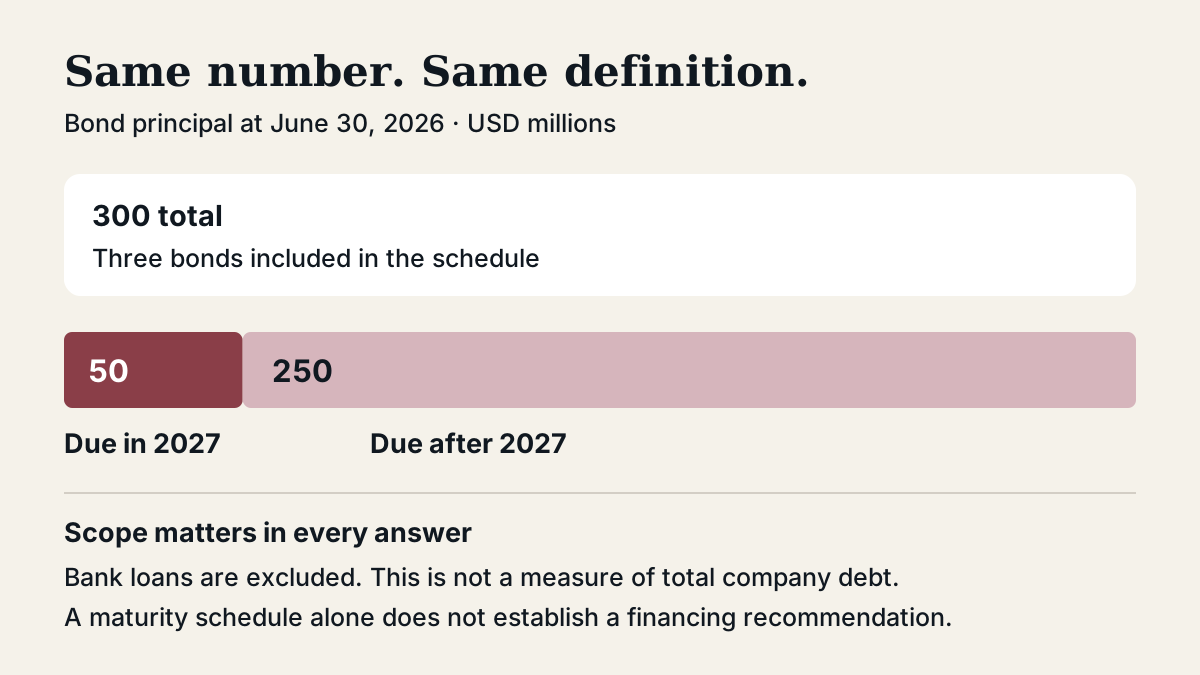
Suppose you completed a six-week summer internship in Singapore and are preparing for Hong Kong banking interviews. An analyst asked you to assemble a briefing from public bond disclosures, including a maturity schedule showing when bond principal must be repaid. Your work covered three outstanding bonds at June 30, 2026, with USD 300 million of principal in total. USD 50 million was due in 2027; the remaining USD 250 million was due later.
You transcribed the terms, checked repayment dates and flagged that a draft summary had described all USD 300 million as due in 2027. The analyst reviewed your correction and used the revised schedule in an internal briefing. The analyst determined the scope and conclusions. You did not recommend or execute a financing transaction, and bank loans were outside the schedule.
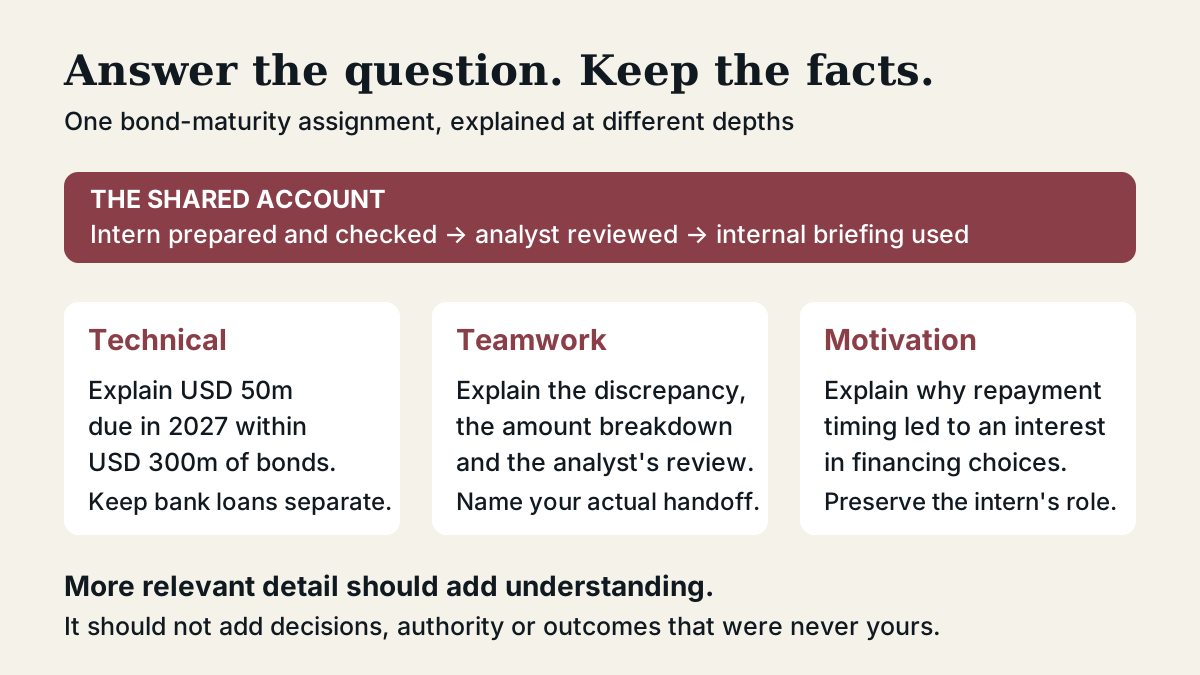
Those are the facts for all three answers. The interviewer can change which part needs explaining.
Technical question: explain the number's meaning
“The schedule contained USD 300 million of outstanding bond principal at June 30, with USD 50 million due in 2027. I checked the maturity terms against the draft summary and corrected the timing. The schedule excluded bank loans, so I would need those balances before describing total debt or the full refinancing requirement.”
This answer explains the measurement and its limitation. If asked about the issuer's financing options, distinguish your present analysis from your internship responsibility: “To assess that now, I would compare upcoming repayments with cash, operating cash generation and credit lines already committed by lenders.” Explaining what you would analyse today does not mean claiming you performed it then.
Teamwork question: explain the handoff to the analyst
“The draft summary and my schedule showed different amounts due in 2027. I highlighted the specific maturity terms and sent the analyst a breakdown resolving the difference: USD 50 million due that year and USD 250 million later. The analyst reviewed it and used the corrected schedule in the internal briefing.”
Here, the useful detail is the handoff: what the colleague needed to inspect and how you made the discrepancy clear. Do not add a dramatic disagreement merely because the question concerns teamwork. If the interviewer asks for conflict and this episode had none, choose another genuine example.
Motivation question: explain what the work taught you about banking
“I enjoyed connecting a repayment schedule to the financing questions it raised. Moving from the total bond amount to the timing of obligations made me want to understand how bankers assess funding choices. My role was preparing and checking the schedule; the analyst formed the conclusions.”
The motive now follows from an experience the candidate actually had. It also leaves room to discuss the broader role without turning an internal research assignment into client advisory experience.
Correct a material mistake without building another version
Even with the facts prepared, you may misspeak under pressure. If you say “USD 300 million is due in 2027,” correct it as soon as you notice: “Let me correct that figure: USD 300 million was the bond principal in scope; USD 50 million was due in 2027.” Then continue with the implication. A specific correction is more useful than a long apology.
If you discover after the interview that a material error affected the submitted application or the interviewer's understanding, use the recruitment contact to provide a concise factual correction. Identify the original statement and the accurate one. Do not quietly change the story for the next interviewer and leave the earlier material claim unaddressed.
Practise the transitions between questions
Record three short answers about your own experience: one technical, one teamwork and one motivation. Use the same facts, without reading a script. Ask a practice partner to change the order and follow up on one number or a verb describing what you did.
Compare the recordings with your submitted application. Underline every number and each claim beginning with “I.” Could all four accounts describe the same episode? Where they differ, decide whether you supplied legitimate additional detail, made an error or overstated your role. Correct the source of the inconsistency, then repeat the affected answer.
Use Elite Interview Guide's Investment Banking Interview Prep to connect this exercise with your wider technical and fit preparation. The objective for the next practice round is concrete: different questions should reveal more of your work without changing what happened.