If your banking internship ended without a return offer, state the outcome directly, separate confirmed feedback from reasons you do not know, and show a specific change in how you work. A return offer is an invitation to rejoin after the internship, usually in a full-time role. Your answer should let an interviewer assess your experience without having to untangle an excuse, a guess, or an inflated recovery story.
This matters during September 2026 recruiting for 2027 starts. Goldman Sachs' Asia Pacific New Analyst page lists October 4, 2026 as its application deadline and directs applicants to the application for available locations. Check the actual role posting for your office, business and eligibility. Prepare this explanation while continuing to apply. Goldman Sachs, 2027 Asia Pacific New Analyst Program.
Get the outcome right before explaining the cause
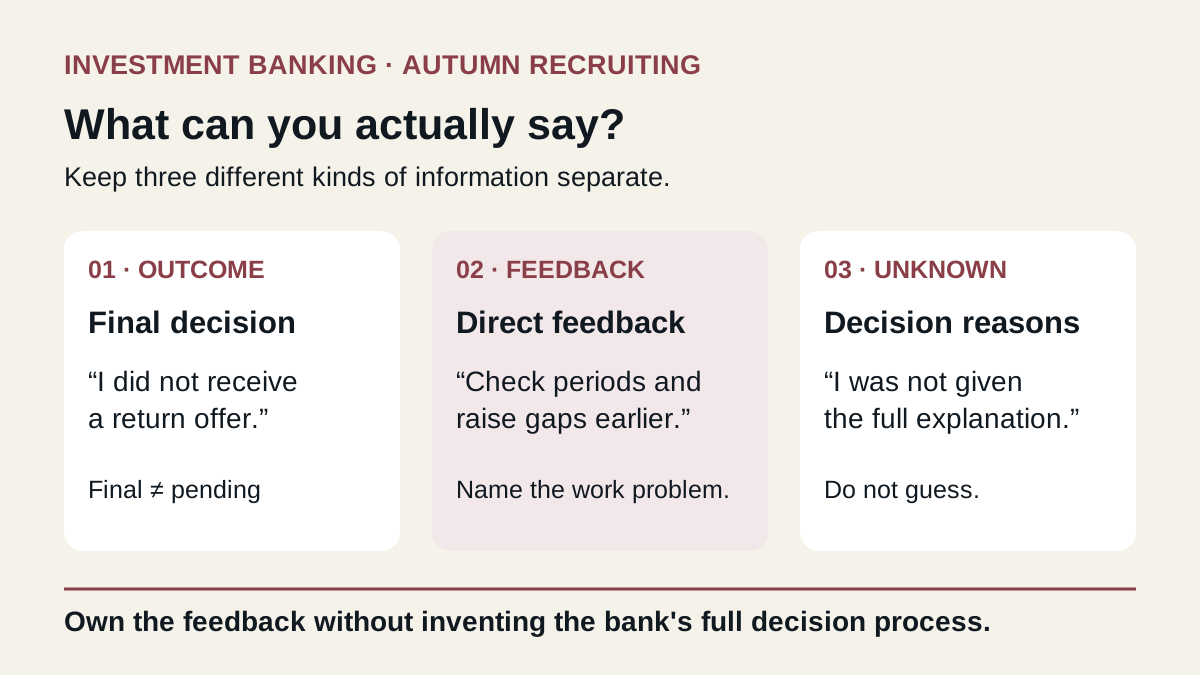
Start by distinguishing three situations. If the decision is final and you received no offer, say so. If the bank has not communicated its decision, say it is pending. If you received an offer and declined it, explain that decision accurately. “I decided to explore other opportunities” cannot substitute for “I did not receive an offer” when the interviewer asks directly.
JPMorganChase's Investment Banking Analyst Internship page says high-performing interns may receive an offer of continued employment. That describes a possibility; it does not tell you why your own bank reached a particular decision. Do not use a programme description to diagnose your outcome or infer that every unsuccessful intern had the same problem. JPMorganChase, Investment Banking Analyst Internship.
Before drafting, write down who communicated the outcome, what they actually said, and which feedback you received during the internship. Keep these distinct from your interpretation. “My reviewer asked me to raise missing data earlier” identifies feedback you received. “The team probably had no budget” is speculation unless someone responsible told you that.
If HR explicitly cited limited hiring capacity, attribute the statement and preserve its limits. It may describe one team or office; it does not establish your ranking or prove that performance played no part. If you also received critical feedback, address it when relevant instead of using hiring capacity to erase it.
Explain the work problem and its consequence
An explanation becomes useful when it shows what another person needed from you. “I needed better attention to detail” is too broad to evaluate. A more precise account identifies the task, the error, its effect on the team, and the change you made. Choose feedback that mattered to your work; do not replace a serious issue with a harmless weakness because it sounds easier to repair.
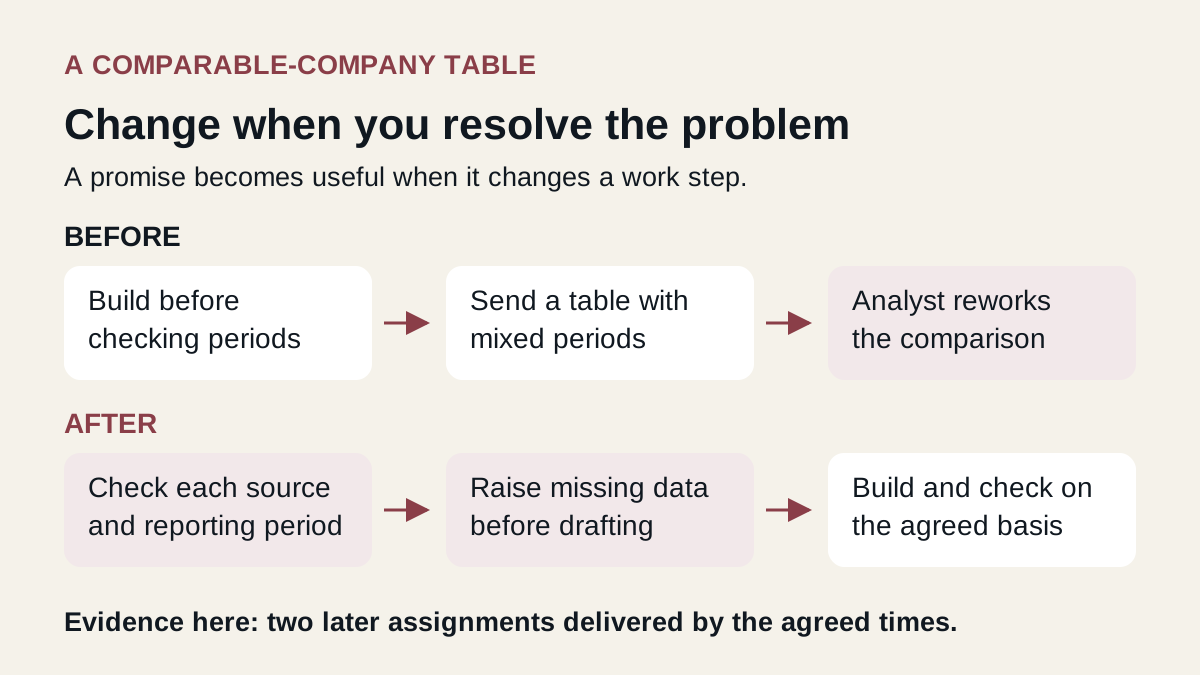
Suppose you completed a Hong Kong banking internship and are applying for 2027 analyst roles. In a draft comparable-company table, you mixed one business's annual revenue with other businesses' latest twelve-month revenue. Comparable-company analysis uses similar listed businesses to inform valuation. Older figures may miss recent growth or deterioration, distorting how expensive one business looks relative to another. An analyst had to rework the table after you sent it.
Your midpoint feedback was to check reporting periods sooner and flag missing information before it threatened delivery. You later received no return offer, but no complete explanation of the final decision. Those are two known facts; the feedback is not automatically the sole cause of the outcome.
Avoid turning this into “My technical skills were strong; it was just communication.” The error affected an analytical output, and the late warning affected the analyst's time. Owning both is more credible than negotiating a softer label for the same incident.
Make the improvement observable
In this example, before building the next table, you record each source, reporting period and missing input. You ask the analyst to resolve an ambiguous period early, then check that the final comparison uses the agreed basis. This gives the analyst time to decide how to handle the gap before you build a misleading comparison.
Suppose you used that approach on your final two assignments, flagged period gaps before drafting, and delivered both by the agreed times. Say exactly that. Two assignments are limited evidence of a changed habit, not proof that you have eliminated mistakes or mastered banking execution.
Your spoken answer could be:
This answer gives the interviewer an incident to examine and a change to test. If your improvement happened later in a university project, describe that setting accurately. A class exercise can demonstrate practice, but it does not establish that your former supervisor endorsed your progress.
Prepare for the question behind the follow-up
If asked why the bank still did not hire you, return to what you know: you received no offer, the feedback identified a weakness, and you were not given a full explanation. Repeating speculation with more confidence will not fill that gap. If the bank did explicitly identify a reason, your answer must reflect it.
If asked why another team should take the risk, explain how the new behaviour addresses the old failure. In the example, checking periods before drafting reduces avoidable rework; flagging a gap early gives the analyst time to choose an approach. Do not promise that nothing will go wrong. Explain how you now make uncertainty visible while the team can still respond.
Once you have explained the change, connect it to the work you are seeking. For candidates moving between Hong Kong, Singapore and other Asian offices, keep your motivation for the destination separate from the internship outcome. Explain what attracts you to the actual advertised work and how your experience helps you contribute. A new office is not itself a solution to late checks, and an unsuccessful internship does not supply a convincing reason for choosing a particular team.
Rehearse with facts you can defend
Write six lines: confirmed outcome; attributable feedback; one incident; consequence for someone else; changed behaviour; evidence and its limits. JPMorganChase's application guidance encourages relevant achievements supported by measurable data where applicable. Use numbers only when they describe something you can substantiate; do not manufacture an error-reduction percentage to make your recovery sound complete. JPMorganChase, How we hire.
Say the answer aloud in about a minute, then practise “What changed?” and “How do you know?” Remove any sentence you could not explain without guessing. Keep client details and confidential documents out of the exercise. Continue with Elite Interview Guide's Investment Banking Interview Prep to connect this explanation with your wider internship and technical preparation.