In an APAC customer-success interview, explain an escalation by separating business impact, technical facts and the account decision. Establish what the customer cannot do, give each response task an owner, and commit to a reliable update. Describe recovery only when the workflow has been checked. Then assess whether adoption, confidence or commercial concerns still put renewal at risk.
Define the problem before offering reassurance
Suppose you are a Hong Kong customer success manager for a Singapore-based enterprise-software vendor. A Shanghai manufacturing customer licenses its purchase-approval workflow for twenty plants. The customer's China operations director reports that six plants cannot approve purchases. Its Singapore regional sponsor wants an English explanation, while the plant coordinators prefer Mandarin updates.
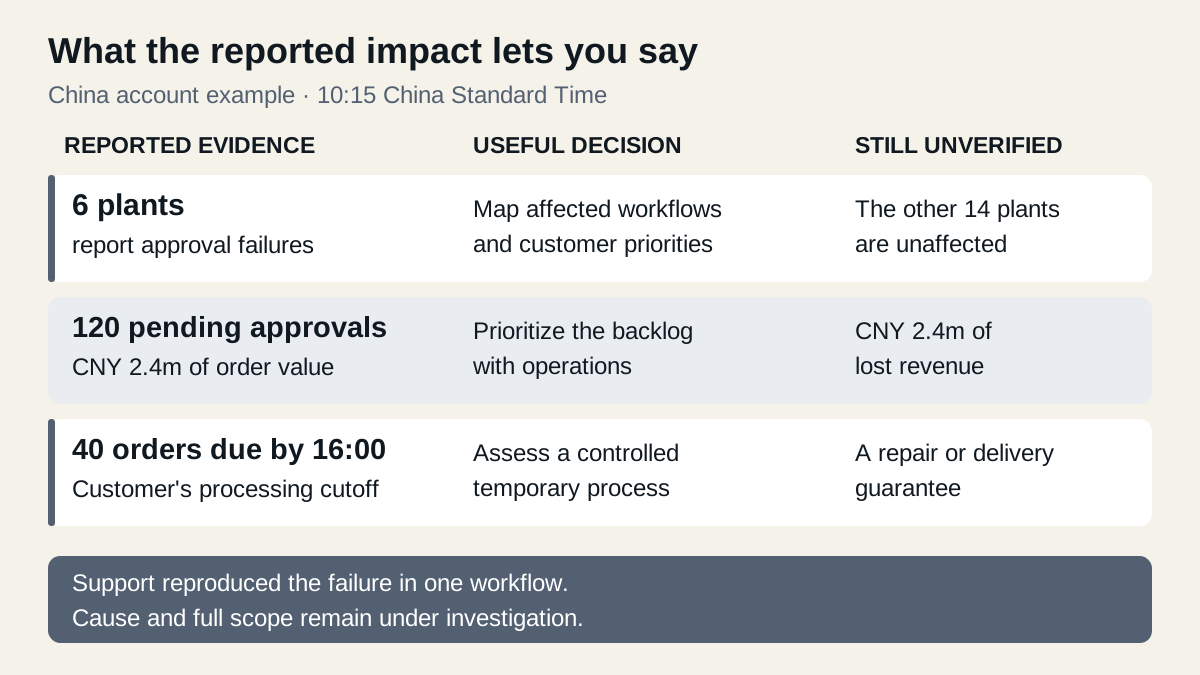
At 10:15 China Standard Time, the customer reports 120 pending approvals covering CNY 2.4 million of purchase orders. Forty need approval before its 16:00 processing cutoff. Support has reproduced the failure in one affected workflow, but has not established the cause or full scope. These are the facts supplied for the exercise.
The CNY 2.4 million measures the value of orders awaiting approval. It is not confirmed lost revenue, a refund liability or the customer's financial loss. Ask which forty orders have the deadline, what happens if approval is late, and whether an existing manual process can preserve the required controls. Validate that option with the customer's operations owner and your technical team before recommending it.
Six plants reporting trouble also does not prove that the other fourteen are unaffected. Record reported impact separately from tested impact. This lets you convey urgency without turning an incomplete report into a claim that the whole account is down.
Assign responsibility across the regional team
Google's incident-response chapter describes separate incident-command, communications and operations roles. Use that division to make your interview answer concrete: someone coordinates the technical response, someone investigates, and someone keeps stakeholders informed. Follow the employer's actual incident process rather than assuming the customer success manager commands engineering.
For this account, confirm the support escalation owner and the next technical checkpoint. As the customer success manager, own the account's impact summary, stakeholder coordination and agreed customer updates. The China operations director identifies urgent orders and accepts any temporary operating process. The regional sponsor makes business-priority decisions; the account's commercial owner handles renewal and any request for compensation.
Keep one timestamped fact record behind the Mandarin and English updates. Use the same meaning for “testing,” “available” and “recovered,” and confirm each audience's preferred channel. Route diagnostic details through the approved support process. The regional challenge is keeping local operating evidence connected to regional decisions, without making plant coordinators repeat their story to every team.
Make an update the customer can use
Atlassian's communication guidance recommends acknowledging an issue early, explaining impact precisely and keeping updates consistent across channels. Translate those principles into a message that distinguishes an action you control from an outcome still under investigation.
For this exercise, assume you agree to send the next update at 11:00 China Standard Time. An English customer message could say:
The 11:00 commitment is a communication deadline. Do not let a regional executive paraphrase it as “engineering will fix this by eleven.” If there is no new technical finding, explain what remains unresolved, who is working on it and when the next update will arrive. Meet the promised update rather than waiting for better news.
Define recovery before saying the account is safe
A proposed fix, a successful test and restored customer operations are different milestones. Ask the technical owner which affected workflows were tested and what monitoring supports the result. Then have the customer's operations team validate real approvals and reconcile the backlog: which orders completed, which remain blocked and whether any were duplicated or processed manually.
The customer may resume work through an approved workaround while the underlying fault remains open. Report both conditions. Conversely, engineering may restore the application while urgent orders remain unprocessed. A technical status change alone cannot answer whether the customer met its cutoff, and it cannot, on its own, justify telling the customer that the work is restored or that recovery is complete.
Close the immediate response when the agreed recovery checks pass. Record any outstanding work with an owner and review date, including the incident explanation and preventive actions when available. Do not promise that the fault can never recur or describe a planned change as delivered.
Separate adoption from the renewal decision
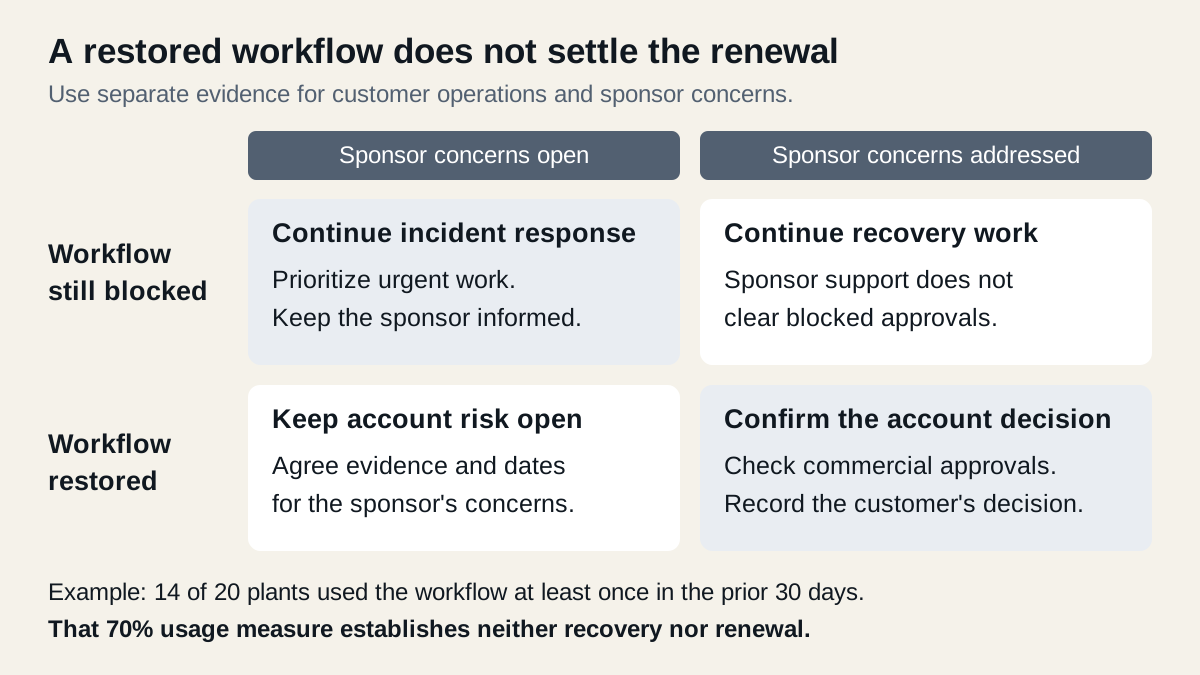
Now add a second fact: before the incident, fourteen of the twenty licensed plants had completed at least one approval in the preceding thirty days. That is 70% of licensed plants using this workflow at least once. It does not measure usage frequency, satisfaction or willingness to renew. The six plants with no recorded approvals are not necessarily the six reporting failures.
GitLab's customer-health framework considers adoption alongside product experience, engagement, executive sponsorship and competitive threats. That broader view is useful here. Investigate why six plants had not used the workflow before the incident: an unfinished rollout, a different operating process and poor training require different responses.
Assume renewal is due in eight weeks and the regional sponsor requests a recovery plan before recommending it. Keep that risk open after technical recovery. Ask what evidence the sponsor needs, whether procurement has other concerns and who makes the final decision. Agree on observable outcomes and review dates with the customer; do not promise discounts, credits or roadmap delivery on another team's behalf.
Turn the scenario into an honest interview answer
For a hypothetical question, use “I would” and state the evidence you would need before reporting success. If asked for a real experience, use your own facts: your responsibility, the choices you made, the observed result and what remained unresolved. A support ticket closing is a valid result to describe; it is not proof that you personally saved the renewal.
An English answer to this scenario could be:
Expect follow-ups. If engineering gives no estimate, maintain the update commitment and escalate the customer's deadline through the agreed owner. If the sponsor demands compensation, acknowledge the request and obtain the commercial owner's decision. If usage returns but the sponsor still doubts the service, agree on evidence that addresses that concern instead of presenting activity as reassurance.
Practise a two-minute answer, then write the 11:00 update with no new repair information. Include impact, verified facts, owners and the next checkpoint. Finish by naming the evidence needed for recovery and for the renewal discussion. Use Elite Interview Guide's interview preparation services to choose the preparation that matches your next interview.