Choose a consulting conflict story in which another person's resistance made sense, your first approach had a weakness, and you took specific action to move the work forward. Explain what you changed in your own proposal or behaviour before describing the outcome. A dramatic disagreement offers little evidence if the only turning point is that everyone eventually accepted your idea.
If you are preparing in September 2026 for autumn interviews or 2027 entry roles, revisit your summer internship while the details remain fresh. Find the moment behind a polished CV bullet: who disagreed, what each person was responsible for, and which decision was yours to make. Preserve your recollection without copying confidential workplace materials. The exact job posting and interview invitation determine the requirements for your office and role.
Start with the firm's guidance, then find your evidence
McKinsey's current Personal Experience Interview guidance asks candidates to discuss experiences in depth, with attention to their own role and actions. It also says the recruiter will confirm interview details. That makes personal ownership a useful preparation priority; it does not establish a fixed script for every applicant. McKinsey interview guidance.
BCG's global interview page describes exploring experience, skills and motivation, and includes a collaborative mindset among the qualities it seeks. Treat this as a reason to examine how you worked with others, while following your own invitation for the format. BCG consulting interview process.
The practical implication is to prepare an experience you can discuss flexibly. Chronological structure helps a listener follow events, but it cannot supply missing judgement. You need to know why you chose an action, what changed your mind and where your influence ended.
Select a disagreement with a legitimate competing priority
A useful story contains a consequential decision and two defensible priorities. Someone may be protecting delivery accuracy while you are trying to improve reporting. Those interests can conflict even when both people want the business to succeed.
Reject a story if you cannot explain the other person's position without calling them lazy, stubborn or afraid of change. Equally, do not manufacture confrontation in an experience that involved routine clarification. A smaller decision you understood and influenced gives you more to discuss than a senior dispute you only observed.
Follow one summer project through the disagreement
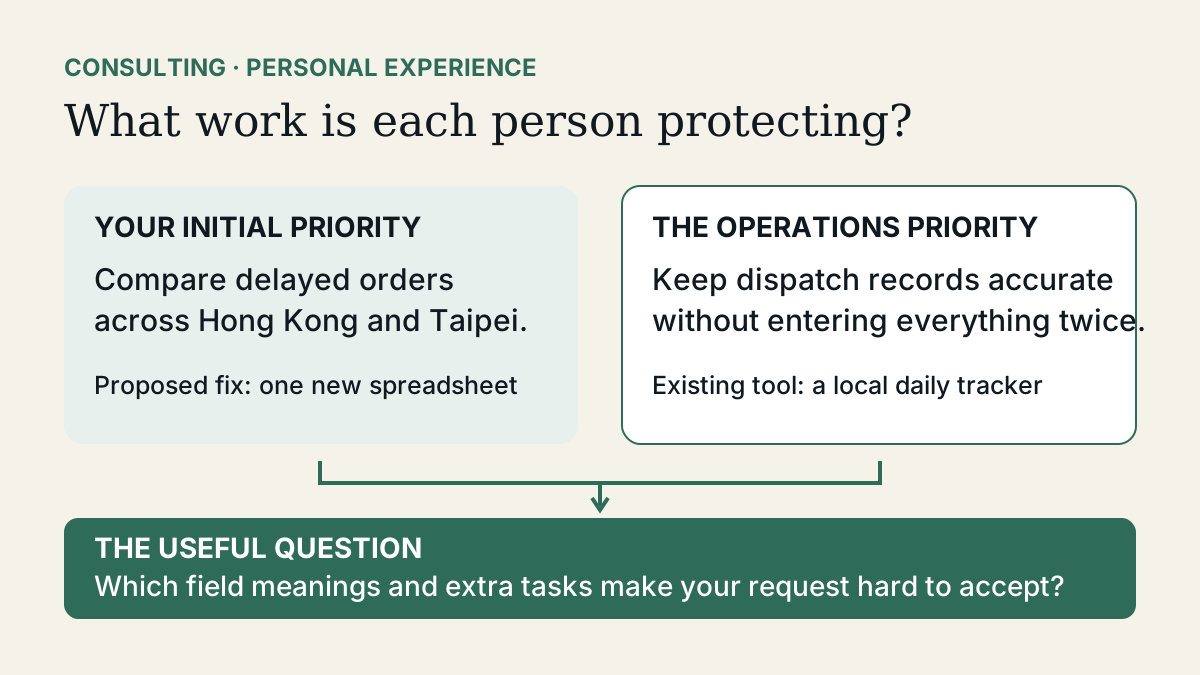
Suppose you spent the summer at a regional distributor, compiling a weekly dashboard for a Hong Kong commercial manager from Hong Kong and Taipei order records. You proposed a standard English spreadsheet so the manager could compare delayed orders. The Taipei operations lead resisted entering the same information again.
Initially, you showed how much easier your spreadsheet would make the regional analysis. That argument failed because it described your benefit while leaving her team with the extra work. Her responsibility was accurate order dispatch, and the team already maintained a Chinese-language tracker used during daily operations.
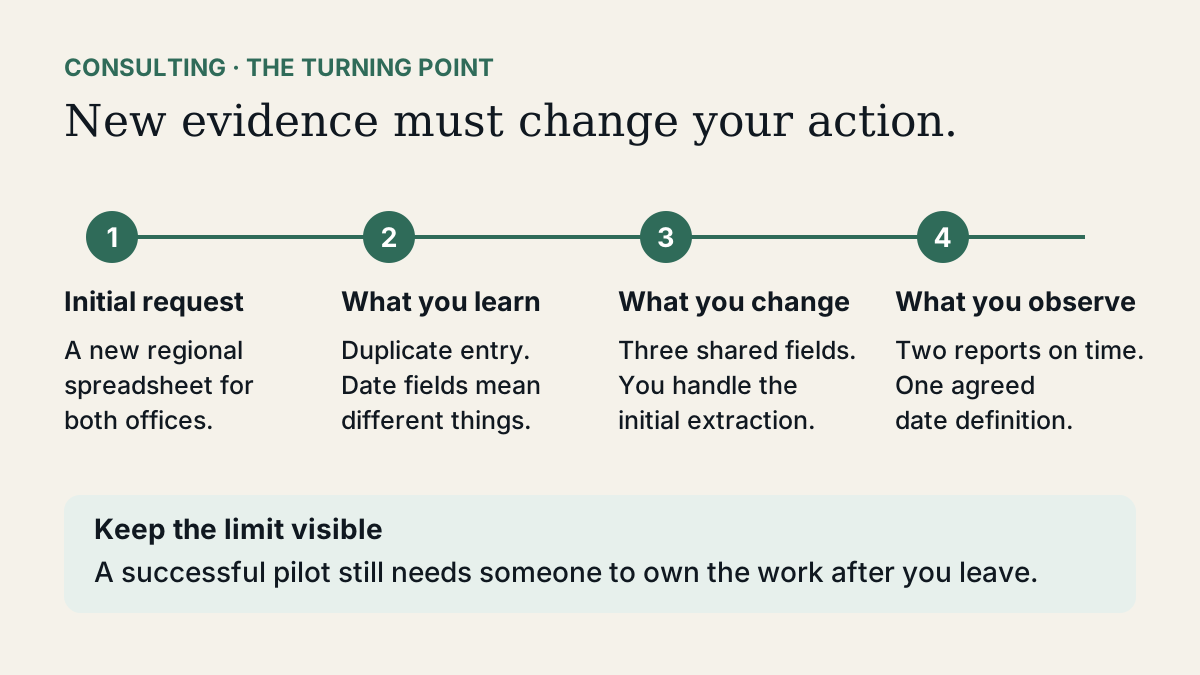
You then asked her to walk through that tracker with you. The discussion exposed a second problem: the date you had treated as the customer promise was actually a local warehouse planning date. Even a fully completed regional spreadsheet would have produced misleading comparisons if you kept using that definition.
The disagreement now has substance. You wanted timely, comparable reporting; she wanted reliable dispatch records without duplicate entry. Neither the language difference nor the office location explains her behaviour by itself. The important regional detail is that the reporting process crossed two working systems with different field meanings.
Show the adjustment that made cooperation possible
Your next action should respond to what you learned. In this example, you keep the local tracker and propose pulling three existing fields into the regional report: order reference, promised dispatch date and current status. You offer to translate the field labels and check ambiguous entries yourself during a pilot covering two weekly reports. The operations lead agrees the field definitions; the manager approves the reduced reporting scope.
This is more informative than saying you listened carefully. You changed the work you were asking someone else to do, corrected your interpretation of the data and accepted responsibility for testing the alternative. You also recognised the decisions that belonged to the manager and operations lead.
Describe what the pilot actually established. Suppose the dashboard arrives on time for both cycles, uses the agreed date definition and requires no separate regional spreadsheet from the local team. Those observations support a successful pilot. They do not prove higher sales or a lasting process improvement. Because the pilot relies on your manual work, you still need an agreed owner before leaving. Without that handover, you have moved the burden onto yourself temporarily.
Rehearse the turning point, not a speech about teamwork
The pilot gives you the outcome; now explain the decision that made it possible. A concise account of this hypothetical turning point could sound like this:
“I had assumed resistance meant the team did not see the value of regional reporting. After walking through their tracker, I realised my proposal duplicated their work and used the wrong date definition. I reduced the request to three shared fields and took responsibility for the initial extraction. The operations lead agreed the definitions, and our manager approved a two-cycle pilot. Both reports arrived on time, although we still needed an owner after my internship.”
That passage gives a listener several decisions to examine. When adapting the method to your experience, retain only what actually happened. If you cannot remember exact dialogue, describe the conversation without presenting reconstructed sentences as a transcript. When interviewing in English about work conducted in Mandarin, translate the meaning of the concern rather than inventing polished English dialogue.
Test whether your story survives a different interpretation
Use these questions in preparation; they help expose gaps in your reasoning.
Was the other person right? In this example, her objection exposed duplicate work and an incorrect comparison. Acknowledging that improves the explanation of your judgement. You can defend the need for regional reporting while admitting your original method was flawed.
What did you personally contribute? Separate your inspection of the tracker, revised proposal and extraction work from the manager's approval and the operations lead's expertise. Cooperation should remain visible even when the question focuses on you.
What if the pilot had failed? Identify a useful next decision: check whether inconsistent definitions or extraction effort caused the failure before recommending expansion. Claiming you would simply persuade harder ignores the evidence that made the original disagreement worth discussing.
Use one practice session to expose the missing detail
Write five lines from your own experience: my initial request; their legitimate concern; the fact I learned; the action I changed; the result I can substantiate. Then explain the turning point aloud in 90 seconds. This is a practice constraint, not a claimed interview time limit. Ask a partner to interrupt at “I realised” and request the evidence that changed your mind.
If that evidence is clear, continue with MBB Case Interview Prep at Elite Interview Guide to practise explaining decisions under follow-up.