Use AI to improve what you can explain yourself, and enter assessed work with only the tools permitted for that exact stage. Permission to refine a CV or rehearse a case does not extend automatically to an interview, online test or employer-assigned exercise. Before starting, read the employer's policy, your invitation and the assessment instructions together; ask the recruiting contact to resolve anything unclear.
For September 2026 applicants targeting 2027 consulting intake across Asia, tool rules deserve a place in your interview preparation. If you are managing applications to several offices, keep a separate record for each invitation. A helpful practice routine becomes a problem when its tools remain active after you switch into an assessment.
Read what the permission actually covers
McKinsey's interview guidance supports responsible AI preparation, including CV improvement and practice. It prohibits invented achievements, AI-generated answers during an interview and assessment use unless specifically authorized. The practical distinction is between developing your own ability beforehand and receiving help while that ability is being evaluated.
BCG's application guidance encourages candidates to use AI for ideas, organization and research while retaining personal judgment and checking the output. That page addresses authentic preparation. Reading it as blanket permission for live assessment assistance would go beyond what it says.
Check the assessment-specific page as well as the general careers advice. McKinsey's integrity expectations require participation without help from other people, a single screen without overlays, and pen and paper for notes and calculations; they prohibit additional applications, websites, calculators and prepared notes. Approved disability accommodations are an exception. Its Solve page separately restricts external tools, prepared notes and recording or screenshots, with disability accommodations requiring written approval.
These are distinct documents with distinct scopes. Do not turn one firm's instructions into a rule for every consulting employer, or transfer permission from an application task to a later interview. When two instructions appear inconsistent, obtain clarification before beginning instead of choosing the more permissive interpretation.
Tie each tool to a task and a stage
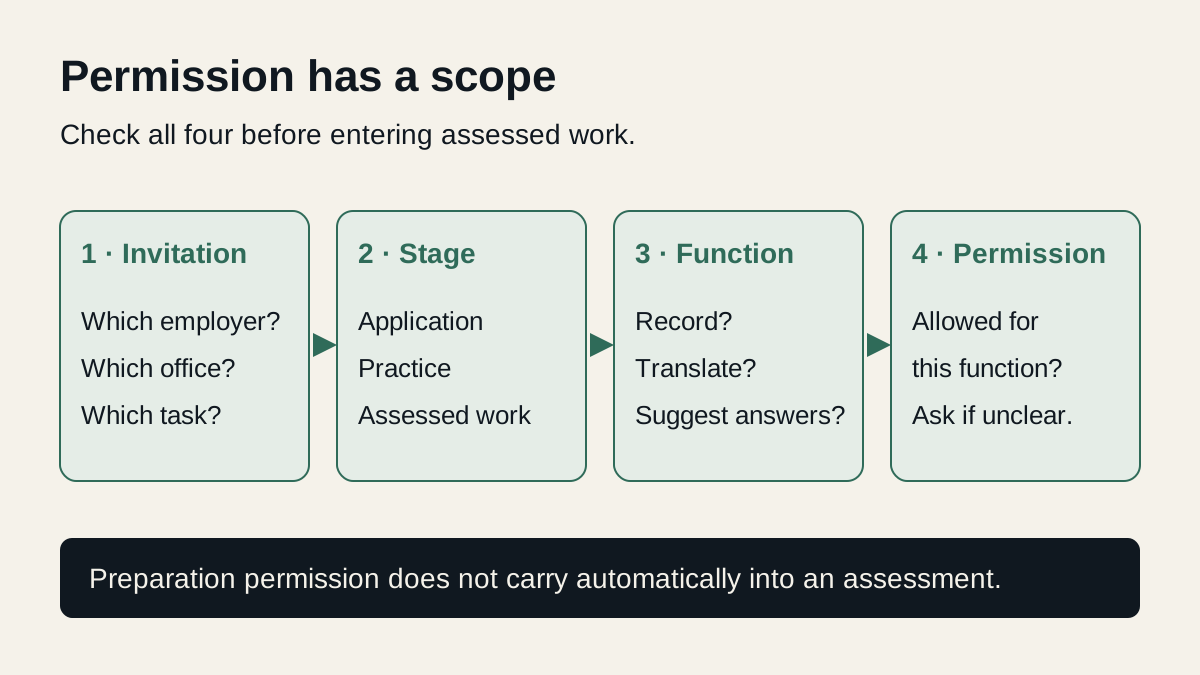
The question “Can I use AI?” is too broad to resolve a real invitation. Break it into the action you intend to take, when you intend to take it and what permission supports it.
| Proposed action | What needs resolving |
|---|---|
| Get feedback on a practice answer before the interview | Whether this is preparation outside assessed work, producing a truthful answer you can explain independently |
| Use a calculator in a timed exercise | Whether that exercise expressly permits that calculator or provides its own |
| Run translation or transcription during a call | Whether that exact function is allowed or covered by an approved accommodation |
| Use AI on an employer-assigned take-home task | Whether the task permits AI, for which work, and with what disclosure |
The label on a tool does not answer these questions. A “meeting productivity” feature might transcribe, summarize, record or suggest responses. A browser extension might operate on a page without a separate chat window. Identify what it does before deciding whether it belongs in your setup.
A useful practice setup can become the wrong interview setup
Suppose you are based in Hong Kong, applying to consulting roles in Singapore and Tokyo. You used AI to identify weak explanations in a practice case, then rewrote the answer yourself. Your calendar also has a meeting assistant configured to join calls automatically. The night before an interview, you review the invitation and notice that assistance and recording are restricted.
Closing the AI chat addresses only one part of the setup. You also need to prevent the calendar assistant from joining, disable any automatic transcription or response suggestions, and check that the configuration remains correct when you reopen the meeting application. McKinsey specifically advises candidates to disable installed AI that could unintentionally assist or record in its virtual interview guidance.
Now consider the second office. Its invitation describes a different task. You should review that task's instructions afresh, even though the laptop is unchanged. If a regional invitation uses a language you are less comfortable reading, resolve its meaning beforehand. Needing help to understand the instructions does not itself establish permission for a live translation tool during the assessment.
Keep each permission record attached to its own task. That makes it easier to identify exactly what still needs clarification before you configure the device.
Ask a question the recruiter can answer precisely
“Is AI allowed?” may produce an answer about preparation when your concern is transcription. A more useful message identifies the invitation, the feature and its proposed use: “For the virtual interview in my invitation, may I use the meeting application's automatic transcript? It creates text from the conversation. I will keep it disabled unless you confirm it is permitted.”
For an employer-assigned exercise, ask separately about research, drafting, calculations and disclosure if the instructions leave those unresolved. Permission for one function does not settle the others. Keep the response with that invitation so you do not accidentally apply it to another employer or stage.
If you need an accessibility adjustment, use the employer's accommodation process early and confirm the approved arrangement. Do not silently substitute a familiar tool for the arrangement that was approved. If instructions remain unclear, contact the recruiter before starting the timed task and seek an agreed way forward.
Rehearse the capability you will need without assistance
Once the setup is clear, test what your preparation has actually taught you. Choose an ordinary practice case, explain your recommendation aloud, and close the practice tool before doing it again. Change one assumption and explain how that changes your recommendation. This exposes a different weakness from awkward wording: an answer that sounds fluent but cannot survive a follow-up.
Use the same approach for personal examples. After receiving preparation feedback, explain the experience without the rewritten version. Check that your actions, numbers and results remain accurate. If a polished sentence gives you ownership you did not have, remove it before it reaches an application or interview.
Finish with a ten-minute invitation review
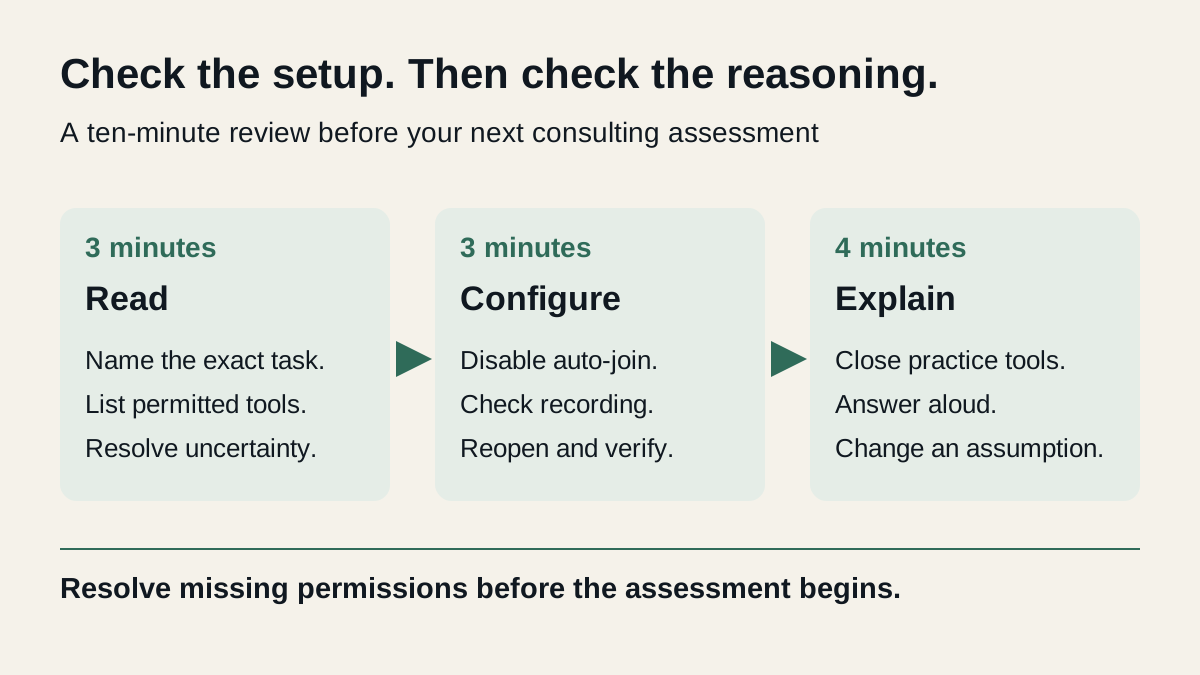
Run this review while there is still time to ask the recruiter a question. Spend three minutes listing the exact stage, permitted materials and unresolved questions. Spend another three checking the actual device: meeting assistants, extensions, recording, other screens and any required settings. Use the remaining four to explain one practice answer and handle a changed assumption without assistance. Resolve missing permissions before the assessment begins.
For structured preparation before an interview, continue with Elite Interview Guide's MBB Case Interview Prep. Practise until you can explain and adapt the reasoning yourself, then enter the employer's assessment under its own rules.