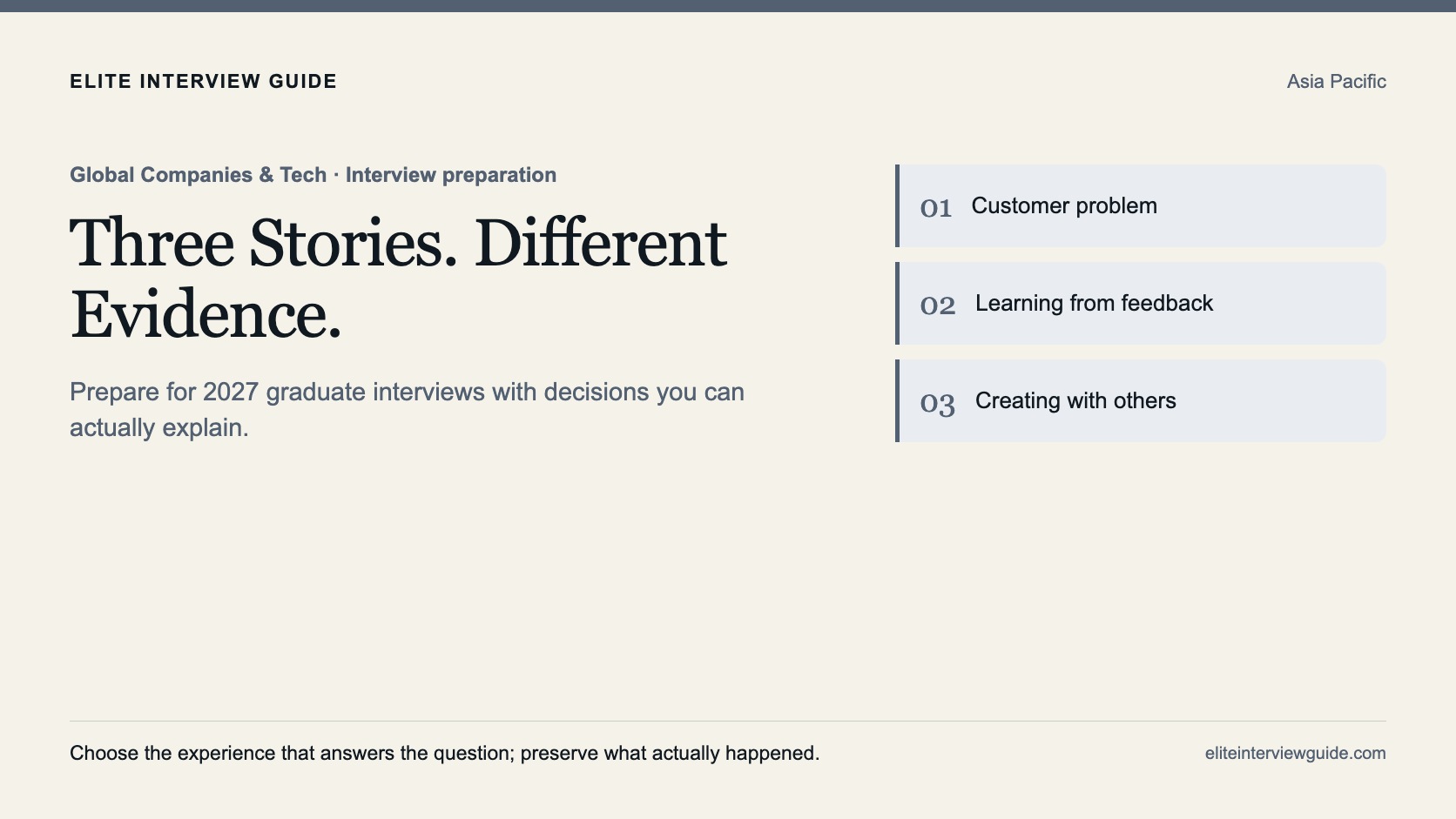
Build a small portfolio of truthful experiences, with each story strongest on a different decision: understanding a customer, changing your approach after feedback, or creating something with others. Match those decisions to the employer's published guidance and your exact role. One experience can support more than one answer, but changing its opening sentence cannot create evidence that the event never contained.
For September 2026 applicants preparing for 2027 graduate entry, recent summer work is a useful starting point because the details are still fresh. Record what you remember while also revisiting university projects and sustained responsibilities outside work. These sources can fill gaps that a prestigious internship leaves open. Check the actual vacancy and invitation for eligibility, location and requirements; the guidance below does not mean every employer or office is currently recruiting.
Read the criteria as requests for evidence
Amazon's published Leadership Principles distinguish attention to customer needs from investigating operational details. Customer Obsession starts from the customer; Dive Deep includes examining mismatches between reported numbers and individual cases. Your preparation should identify the decision where you did either, rather than merely repeat the principle's name. Amazon Leadership Principles.
Microsoft advises candidates to identify relevant skills in the job description and prepare specific examples, including how they used feedback, collaborated and adapted. Its culture guidance also describes a growth mindset. This gives you a reason to examine an actual change in how you worked. Microsoft interview tips.
P&G describes behavioural interviews that explore capabilities and experience in relation to the role. Its public examples include creating something new and working with others. Those are useful preparation themes, without predicting which questions your interviewer will choose. P&G hiring process.
These descriptions overlap, but overlap does not make the employers interchangeable. Keep their wording beside your own notes, then ask what specific action would make your example relevant. Treat the mapping below as a preparation aid, not an employer scoring system.
Start with the experiences one candidate can explain
Suppose a Hong Kong student has three experiences to consider: a summer internship at an online retailer, a university forecasting project and responsibility for a peer-tutoring society. The candidate initially plans to use the internship for every answer because it sounds most commercial. Examining the other experiences produces a broader and more accurate portfolio.
Story A: a returns problem. During the internship, weekly reporting shows few complaints classified as returns problems, while customer-service colleagues keep describing confused buyers. The student reviews anonymised case summaries with permission and notices that Chinese-language questions about return instructions were often classified under a general delivery label. The student proposes a clearer returns guide, and a supervisor approves a small trial.
The strongest evidence concerns understanding the customer's problem and questioning an apparently reassuring measure. The language detail matters because the reporting labels hide the question buyers actually ask. The candidate can explain the classification issue and proposed change, but cannot claim that a short trial established a lasting reduction in returns.
Story B: feedback that changed a forecasting project. Earlier in the academic year, a tutor pointed out that the team's demand forecast used information the team would not have had when making the prediction. The student checked when each input would have been known, rebuilt the comparison using earlier information and explained why the revised result looked less impressive. This provides evidence of learning and accepting a less flattering conclusion. It does not establish experience serving paying customers.
Story C: a new tutoring handover. In the society, a substitute tutor once arrived without knowing which material a student had covered. The candidate proposed a short handover note, asked tutors which fields they would actually maintain and tested it during two substitute sessions. Tutors contributed the format; the candidate organised the trial. Both substitutes received notes before teaching, supporting a limited account of a new process that others helped create. Continuing use remained unproven.
Mark the gaps before polishing the answers
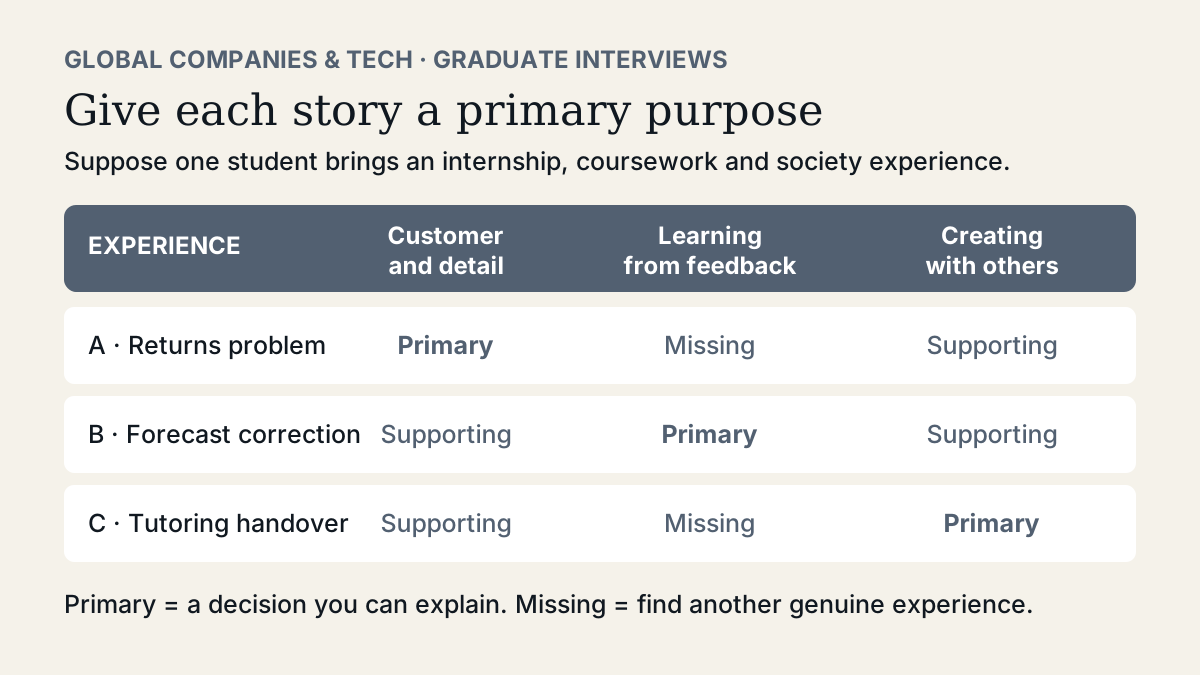
Create a table with experiences as rows and the relevant abilities as columns. Use three labels: primary evidence, supporting evidence and missing evidence. Primary means you can explain a consequential personal action, why you chose it and what followed. Supporting means the ability appeared, but another decision drove the story. Missing means you would need to add events that did not happen.
For this candidate, Story A is primary for customer investigation; Story B is primary for learning from feedback; Story C is primary for creating a process with others. Story A may also contain cooperation, but reviewing cases with colleagues alone does not make it a strong account of resolving a difficult team problem.
Entries marked as missing are useful. They tell you which earlier experiences to revisit, rather than where to add another adjective. A modest tutoring example may answer a question more directly than a retailer's large sales figure you did not influence.
Adapt the emphasis while keeping the events intact
If asked about a customer problem, the candidate can begin Story A with the buyers' confusing return instructions. If asked about analysing a discrepancy, the same event can begin with the mismatch between reporting and case summaries. Both answers remain defensible because both decisions occurred. Reuse is appropriate when the evidence fits; it becomes weak when the desired ability exists only in your conclusion.
If the question instead asks how feedback changed your work, Story B is the clearer choice. Saying “the project taught me to be customer-focused” cannot substitute for an actual customer interaction. Equally, changing “we created the handover” to “I created it” would erase the tutors' contribution. Decide what to emphasise only after fixing the factual account.
For each story, retain a short note covering your responsibility, your decision, others' contributions, the supportable result and the unresolved limit. Use your own recollection and permitted information. A story portfolio does not require taking confidential files from an internship.
Rehearse the selection decision this week
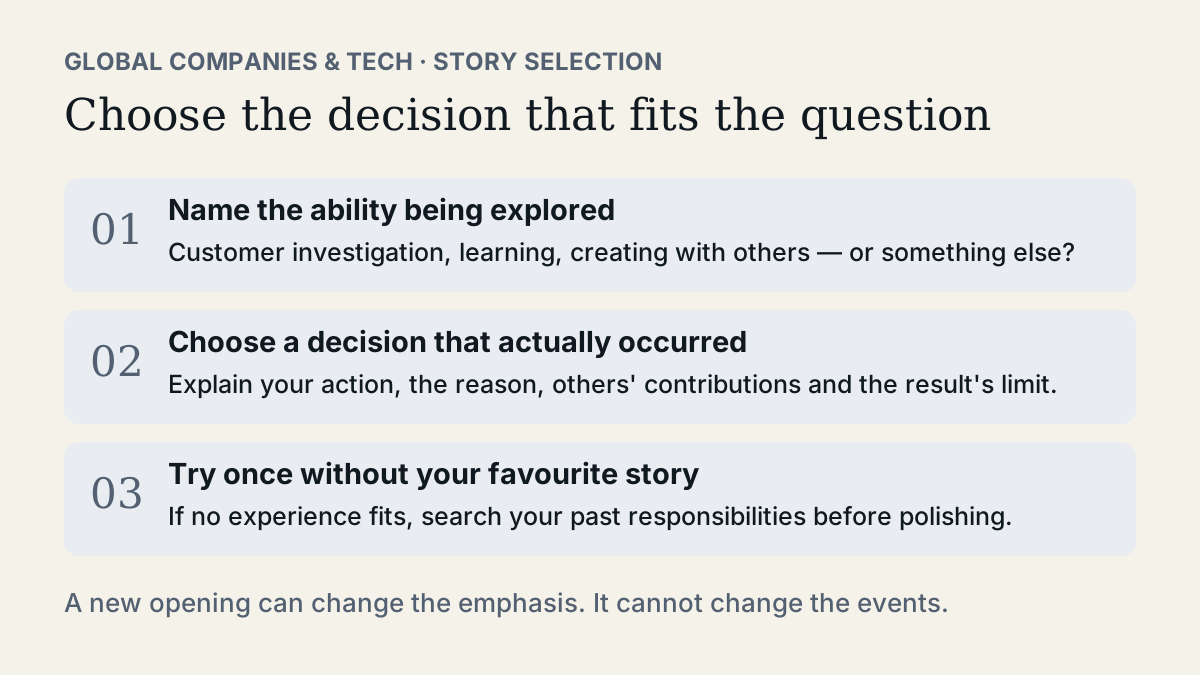
Start with the three experiences you can recall most accurately. For each, say aloud: “The decision I made was ___, because ___; the result I can support is ___.” Then ask a practice partner to name an ability from your target role's published requirements. Choose your story before answering and explain why it fits.
Repeat once with your favourite story unavailable. This exposes whether your preparation has breadth or just one fluent answer. If no alternative fits, identify the gap honestly and search earlier responsibilities; do not invent a more convenient event. Situation, task, action and result can organise an answer, but they cannot supply its missing substance.
Use the resulting notes to choose your next preparation step through Elite Interview Guide services. Bring distinct decisions you can explain, including the smaller ones that your CV leaves out.