In a Hong Kong convertible-bond interview, compare cash interest, ownership dilution and the obligation if conversion never happens. A convertible can reduce the coupon relative to an assumed straight-debt alternative, but investors receive an equity option in return. Calculate the shares under the stated conversion terms, then test whether the issuer can repay principal without a rising share price or an uncommitted refinancing.
For candidates covering Chinese issuers from Hong Kong or a regional banking team, there is another practical issue: the bond currency, conversion currency and quoted share unit may differ. Resolve those definitions before doing arithmetic.
Read the payment and conversion terms
JD.com's May 21, 2024 pricing announcement described a 0.25% annual coupon and an initial conversion price of approximately US$45.70 per American depositary share, or ADS. Each ADS represented two Class A ordinary shares; the reference price used a Hong Kong share price adjusted for that ratio and an exchange rate. US$45.70 per ADS therefore was not HK$45.70 per ordinary share. JD.com, May 2024 pricing announcement.
The lesson is to write a short terms summary: principal and currency, coupon, conversion unit and price, permitted conversion dates, settlement method, and dates when cash repayment can be required. Principal is the borrowed amount; the coupon determines scheduled interest on it. Neither tells you the total economic cost of the financing.
Compare three ways to raise the same amount
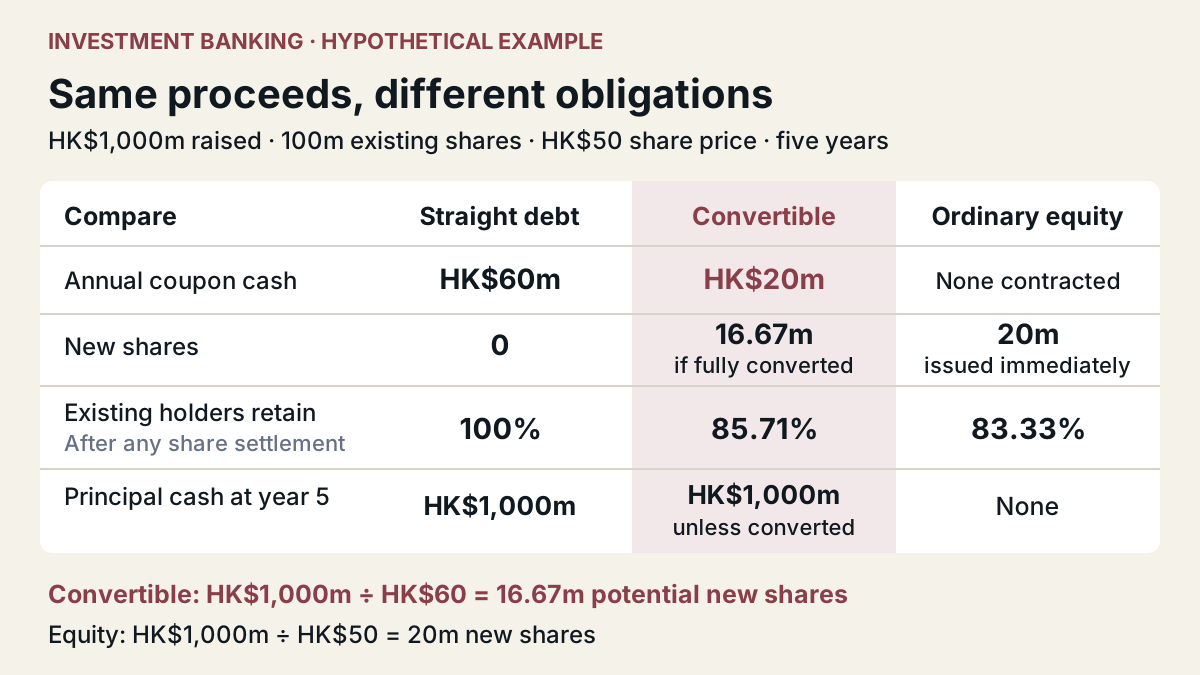
Suppose a Hong Kong-listed company with operations in China needs HK$1,000 million for expansion. It has 100 million ordinary shares outstanding at HK$50 each. Consider three hypothetical alternatives:
| Term | Straight debt | Convertible bond | Ordinary equity |
|---|---|---|---|
| Proceeds raised | HK$1,000m | HK$1,000m | HK$1,000m |
| Annual coupon | 6%, or HK$60m | 2%, or HK$20m | No contractual coupon |
| Scheduled maturity | Five years | Five years | No debt maturity |
| Share issue price | None | HK$60 if converted | HK$50 now |
| New shares | None | 16.67m if fully converted | 20m immediately |
Assume both bonds are issued at principal value. The convertible allows holders to choose conversion at maturity into newly issued ordinary shares only, at a fixed HK$60 price. Assume all five annual coupons are paid, including the final coupon before settlement. Neither side can require early repayment; there are no conversion adjustments, buybacks or other share issues. Exclude fees, taxes and accounting presentation to isolate the financing choice.
These assumptions deliberately simplify the real securities. JD's announcement allowed the issuer to settle conversion with cash, ADSs or both. A real analysis must model the actual settlement election before calculating shares and cash required. JD.com, conversion settlement terms.
At HK$60, the conversion price is 20% above today's HK$50. The conversion share count is HK$1,000m ÷ HK$60 = 16.67m shares. Use unrounded share counts in subsequent calculations. A higher conversion price means fewer shares for the same principal if conversion occurs. It does not prove that holders will convert.
State what you mean by dilution
An equity issue creates 20m shares, increasing the share count from 100m to 120m, or 20%. Existing shareholders collectively retain 100 ÷ 120 = 83.33% of the company. New investors own 16.67%. Calling all three quantities “20% dilution” hides different denominators.
Full conversion creates 16.67m shares, a 16.67% increase over the original count. Existing shareholders retain 100 ÷ 116.67 = 85.71%; converting holders own 14.29%. These are ownership percentages after assumed share settlement, not immediate ownership changes when the bond is issued. Before conversion, the convertible has issued no shares in this model.
Neither calculation measures earnings-per-share dilution. That also depends on earnings generated by the proceeds, financing expense and the applicable accounting treatment. Ordinary equity has no contractual coupon or principal repayment, but investors receive an ownership claim and expect a return. It is not free capital.
Keep principal in the nonconversion case
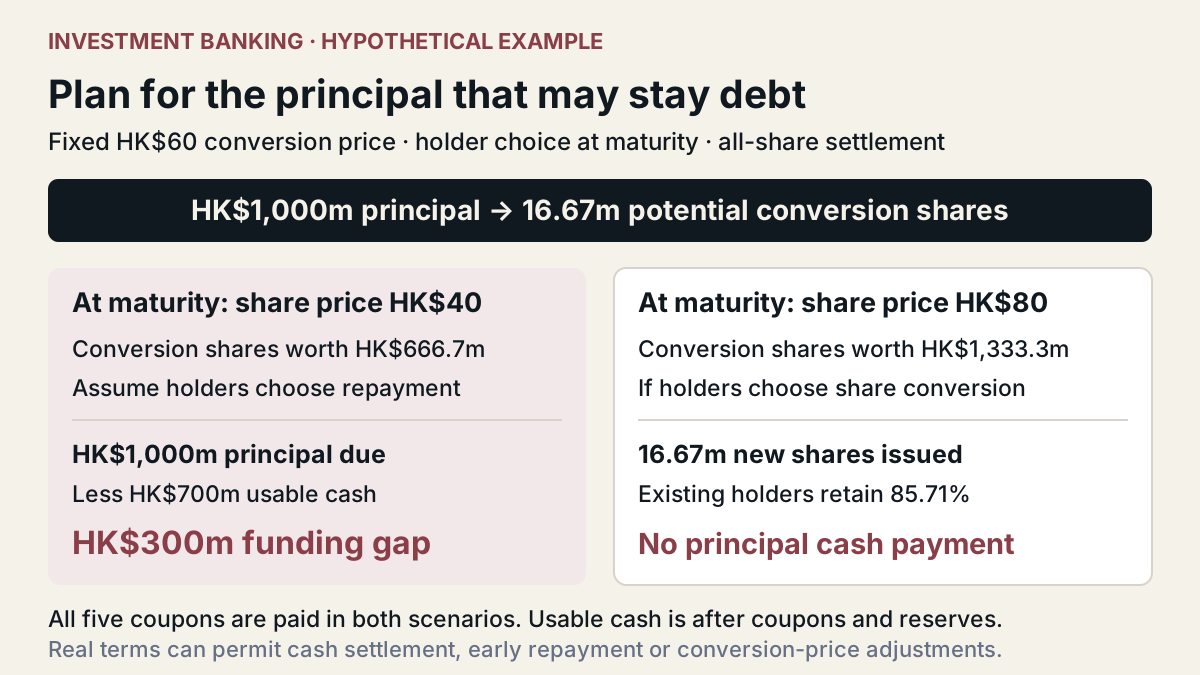
Build the repayment plan on nonconversion. Suppose the share price at maturity is HK$40. The 16.67m conversion shares would be worth about HK$666.7m, below the HK$1,000m principal repayment. Under our simplified terms, assume holders choose repayment. The company still owes HK$1,000m, despite having paid a low coupon for five years.
If it has HK$700m of usable cash after all coupon payments and operating reserves, the principal funding gap is HK$300m. A statement that the company will refinance leaves the main question unanswered: which committed funding, asset sale or cash generation closes that gap, and when? Cash elsewhere in a corporate group counts only after you establish that the borrower can access it in the required currency and by the payment date.
At HK$80, the same conversion shares are worth about HK$1,333.3m. If holders choose conversion, the principal is exchanged for shares and no principal cash repayment is due in this model. That is a different settlement outcome, not a reason to remove debt from the earlier liquidity analysis. A price above HK$60 during the five years also does not trigger conversion: our assumed conversion window is at maturity.
Replace the maturity headline with a payment timeline
Alibaba's May 24, 2024 announcement stated a June 1, 2031 maturity but also gave holders a right to require cash repurchase on June 1, 2029. It permitted cash, ADSs or combined settlement on conversion at the issuer's election. The announced terms show why final maturity alone does not establish the first possible refinancing date or eliminate cash needs upon conversion. Alibaba, May 2024 pricing announcement.
For a real term sheet, identify holder rights to demand repayment, called puts, and issuer rights to redeem early, called calls. Add those dates, settlement choices and conversion-price adjustments to the financing model. These dated issuer examples illustrate contractual differences; their original conversion prices and coupons are not quotes for today's financing market.
Give a conditional financing recommendation
In our example, the convertible saves HK$40m of coupon cash annually, or HK$200m over five years, relative to straight debt. That is an undiscounted cash comparison under the stated terms, not a complete cost-of-capital calculation. The conversion option is part of what investors receive for accepting the lower coupon.
Recommend the convertible only if the company values that cash saving, accepts the potential ownership change and can fund the repayment case. Prefer equity within this comparison if the business cannot support debt service and repayment under a credible downside. Straight debt may fit an issuer that can afford the higher coupon and wants to avoid issuing equity through conversion. Actual market access and terms still decide whether any alternative is executable.
Practise a ninety-second recommendation that weighs the convertible's HK$40m annual coupon saving against the 16.67m-share ownership shift if holders convert, then move the hypothetical convertible's cash repayment date to year three, with only HK$550m available after coupons and reserves. The gap becomes HK$450m; explain which funding evidence would change your recommendation. To rehearse the cash-cost versus dilution tradeoff across more issuers, continue with Investment Banking Interview Prep.