
When an interviewer asks you to discuss a Hong Kong privatisation, remembering the company and the cash price per share is only a starting point. You also need to explain why that price deserves scrutiny and which conditions could prevent completion. A one-page deal discussion sheet helps connect the evidence to your judgment. It should tell you where each fact came from, which conclusions are your own, and what remains to be checked. That gives you something useful to defend when the interviewer moves beyond the headline and asks a follow-up question.
The direct answer
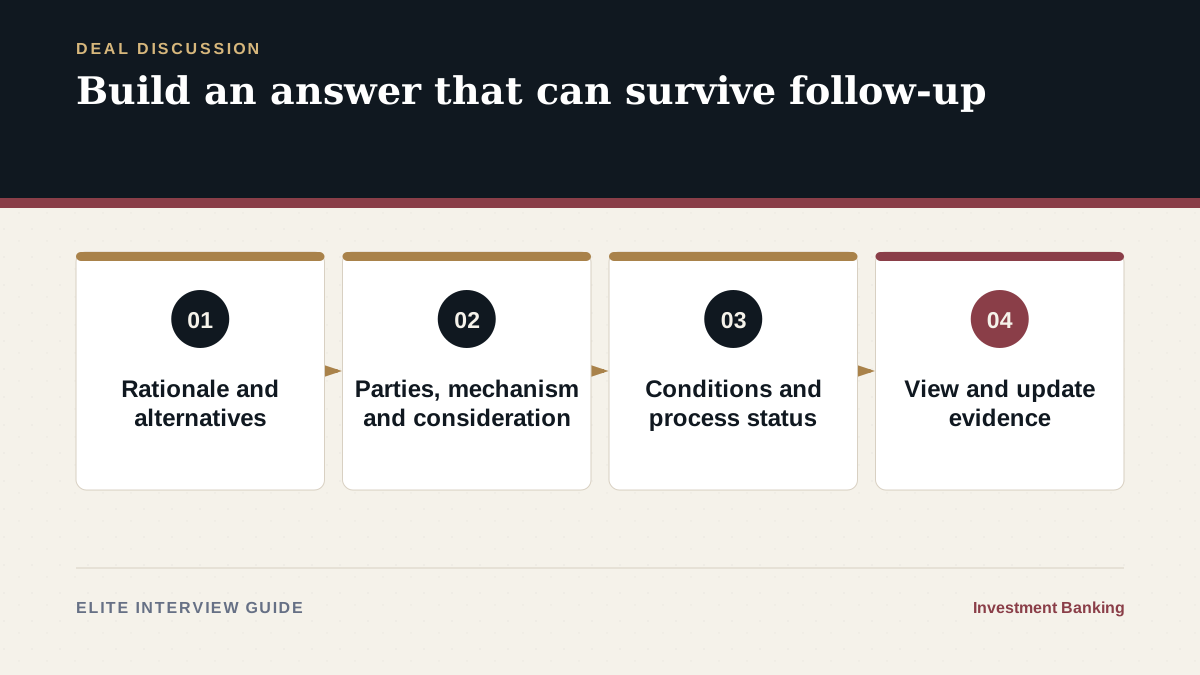
Discuss a Hong Kong privatisation through four questions: why do it, how does it work, can it complete, and what is your view? Establish the parties, mechanism, consideration and dated process status from official documents. Then separate valuation comparisons from completion conditions. Explain your evidence and what new announcement would change your judgment. Hopewell Holdings’ 2018 proposal provides a historical practice case.
Put the documented facts on one page
This case discussion uses the background recorded in the SFC’s statement dated 10 April 2019. That statement supports the following facts; it does not establish the deal’s final outcome.
| Item | Documented fact | Interview use |
|---|---|---|
| Parties | Petrus HK Co Ltd and Hopewell Holdings Ltd; Hopewell’s stock code was 54 | Distinguish the offeror from the target |
| Mechanism | A privatisation proposed by scheme of arrangement | Identify the relevant process and approval conditions |
| Consideration | HK$38.80 cash per scheme share | A per-share consideration is not enterprise value |
| Announcement dates | The statement records the offer period beginning on 4 December 2018, when the privatisation was first announced; the joint announcement followed on 5 December | Keep the first announcement and joint announcement dates distinct |
| Document milestone | The scheme document was despatched on 25 February 2019 | Despatch does not establish shareholder approval or completion |
The sheet does not yet contain an actual premium, funding source or final outcome. Add those only when a document directly supports them. The SFC statement concerns dealing restrictions and disclosure issues during the offer period. Its regulatory context is not, by itself, evidence of the scheme’s completion risk.
Why do it? Separate stated reasons from inference
“Privatisation” does not prove that the company was undervalued. Undervaluation is a conclusion requiring an argument.
Divide your notes into what the document says, what it might imply, and what evidence you still need. Greater decision-making flexibility could be an analytical question to investigate. Call it the offeror’s stated rationale only if a transaction document says so. Similarly, check the company’s disclosure before attributing the decision to listing costs. These are investigation prompts, not established Hopewell motives.
Consider alternatives: remaining listed, selling an asset, or changing capital allocation. Questions about control, the asset portfolio, shareholder returns and required funding help test the choice. Underline words such as “obviously”, “definitely” and “because” in your notes. Where the supporting evidence is missing, replace certainty with a judgment that new information could test.
How do you assess the price? Define the comparison first
HK$38.80 identifies the cash consideration per scheme share. It cannot establish fairness on its own. Keep three references separate:
- The unaffected share price. Define the reference date before calculating consideration divided by reference price, minus one. A price after the first announcement may already reflect the proposal. Earlier relevant disclosures or market information may also require you to reconsider the date.
- Asset and business value. Check the valuation date, asset scope, liabilities and adjustments. Compare like with like: a per-share consideration can be compared with per-share asset value, but not directly with enterprise value for the whole business.
- Comparable transactions or companies. Explain why the comparison fits, including asset mix, control and timing. Similar multiples do not make different deal terms interchangeable.
A premium measures a gap against a chosen share price. Asset or business analysis develops a value judgment; comparables provide another cross-check. None substitutes for the others.
If asked whether the consideration is reasonable, explain which reference dates and inputs you would verify, then compare the ranges supported by each method and their implications for minority shareholders. An unsupported “fair price” adds less than a clear analytical process.
Can it complete? The voting tests use different denominators
Start with the mechanism, scheme conditions and documented stage. The Takeovers Code version effective from 13 July 2018 provides a case-era voting exercise.
Rule 2.10 in that inspected version requires approval by at least 75% of the votes attached to disinterested shares cast at the meeting, and votes against not exceeding 10% of the votes attached to all disinterested shares. These are additional to legal requirements. The definition of disinterested shares excludes the offeror and concert parties, among others. Check eligibility, excluded shares, applicable legal requirements and the specific scheme conditions; these two Code tests are not a complete approval checklist.
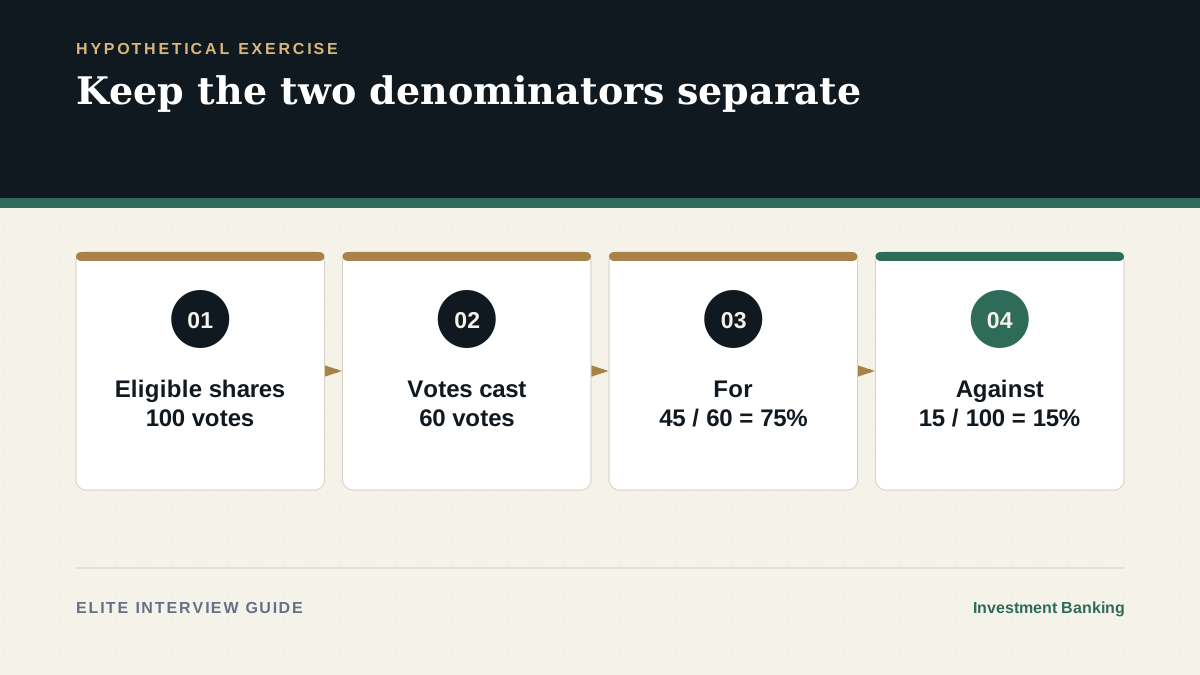
Use a hypothetical classroom exercise. Assume 100 eligible votes attached to disinterested shares. Of these, 60 are cast: 45 for and 15 against. Approval is 45/60, or 75%, satisfying the first Code test. Opposition is 15/100, or 15%, exceeding the second. The first test is met, but the second is not. These are exercise inputs, not Hopewell’s actual voting results.
Explain the denominators before discussing percentages, then identify what to check in the scheme document and poll results. For another transaction, verify the applicable Code version again rather than presenting this historical version as current rules.
Practise an answer that can survive follow-up questions
Use this practice prompt: “Discuss a Hong Kong privatisation and explain what you would focus on.” The following is a 90-second practice script:
Time yourself reading it. Keep only statements you can explain under questioning, move unverified information into a “to check” column, and replace the background with primary facts from your chosen transaction.
Finish your one-page deal discussion sheet
Record a source and document date beside each factual statement.
| Section | What to write |
|---|---|
| Why | Stated rationale, your inference, and at least one alternative worth testing |
| How | Parties, mechanism, per-share consideration, announcement timeline and dated status |
| Value | Reference date, valuation methods, inputs to verify and comparison limits |
| Completion | Eligible shareholders, conditions, remaining steps and direct evidence of progress |
| Your view | An evidence-based judgment and one new fact that would change it |
Next step: complete the one-page sheet, record a 90-second answer, then update your judgment using a subsequent official announcement.
Listen for unsupported inferences, confusion between per-share price and company value, and whether you identify what new evidence would change. Ask a practice partner to challenge one entry. You should be able to point to the source, explain the reasoning and revise the answer.
Sources
- SFC public criticism statement, 10 April 2019: background paragraphs support the parties, mechanism, cash consideration and dates used here.
- SFC Codes on Takeovers and Mergers and Share Buy-backs, historical version effective from 13 July 2018(eff_20180713_20230928).pdf): Rule 2.10 and its notes support the case-era voting thresholds, denominators and disinterested-share scope.