When a product interview asks how to enter Japan, start with a specific customer and the task they need to complete. Establish demand at a stated price, identify barriers in the journey, and check whether the business can support the resulting experience. A translated interface, an interested audience and a service ready to operate are three different accomplishments. Explain how each will be tested.
Define the customer and the launch decision
Suppose a Singapore-based service sells live online design workshops and wants to enter Japan. Its first proposed audience is employed designers living in Japan who pay personally for evening classes. Some prefer Japanese instruction; others use both Japanese and English at work. Employer-funded training, students and overseas attendees are outside this initial exercise.
The team has six weeks to decide whether to offer workshops in Japan regularly. Its proposed pilot has 30 seats at JPY 6,000 per person. Assume the instructor can deliver it in Japanese. The decision concerns the surrounding experience: finding the right class, understanding the offer, registering, paying, attending and getting help. More traffic would be of little value if people cannot tell which language the live discussion uses.
Turn local knowledge into questions you can investigate
Start by observing recent behavior. Ask prospective users to show how they chose and paid for their last professional course. Who selected it, what alternatives did they compare, and what nearly stopped the purchase? Then ask them to use the proposed journey without coaching them through confusing screens.
Japan's Digital Agency guide to user-centred services discusses investigating users' circumstances, trying services directly and speaking with affected users. Although its setting is government services, those methods provide a useful starting point for this research. They do not establish what every Japanese customer wants.
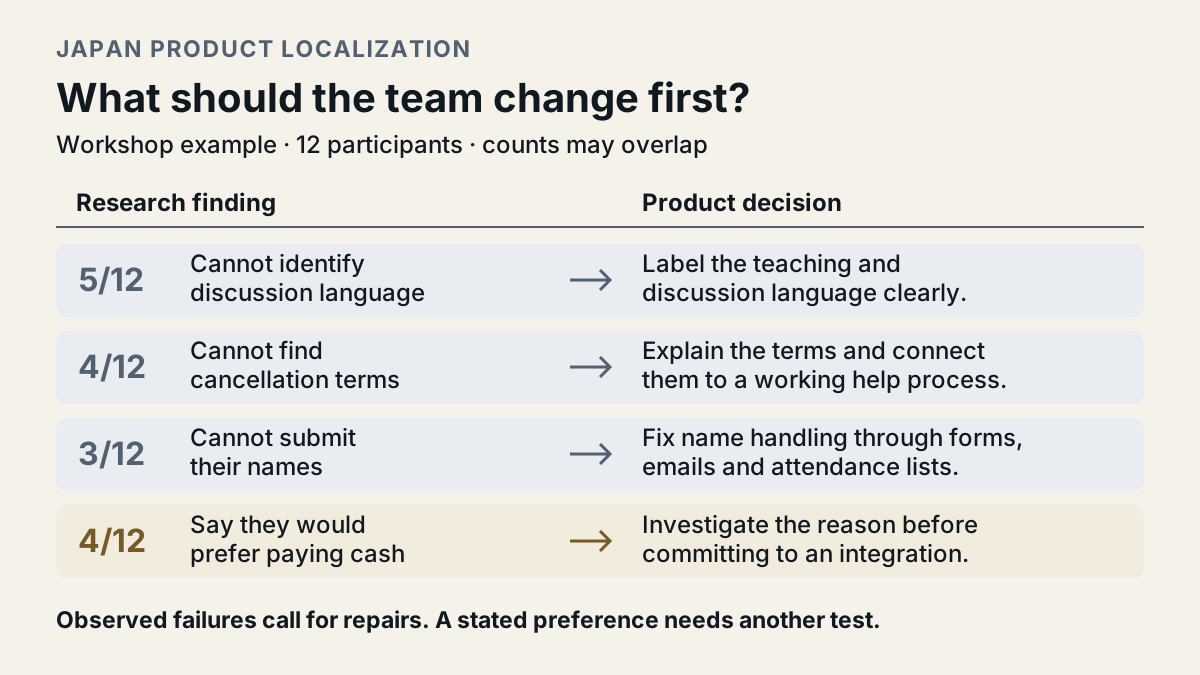
Assume twelve participants try the workshop prototype. Five cannot identify the language used during discussion, four cannot find the cancellation terms, and three cannot submit their names. These groups can overlap. Four also say they would prefer paying cash. The observed failures justify repairing the tasks; the stated payment preference requires further investigation before committing to an integration. Twelve participants can reveal problems, but cannot establish national demand or reliable market shares.
Follow each change beyond the screen
Language work should clarify what the customer will receive: instruction, discussion, supporting materials and help. Display the class time with Japan Standard Time explicitly identified. Test whether users can explain the schedule and cancellation terms in their own words before they pay. A longer page is justified only if the added information resolves a real question.
Registration creates a different requirement. W3C's guidance on personal names explains why name formats vary even within a country and asks designers to examine whether separate name fields are necessary. It also describes pronunciation information used for sorting Japanese names. For this workshop, support the names users actually enter and request pronunciation only if the instructor needs it; do not add mandatory fields merely because another Japanese website has them.
Carry those names through confirmation emails, attendance lists and support searches. A form that accepts a name while the confirmation email corrupts it has not solved the problem. Likewise, a clear cancellation page needs a corresponding operating process: who receives the request, decides the outcome and tells the customer what happens next?
Treat trust as a hypothesis with observable consequences. Test whether a clear instructor introduction, sample lesson, total price and cancellation explanation help participants decide. Avoid assuming that testimonials, a particular visual style or more formal language will produce trust simply because the market is Japan.
A payment choice changes the operating model
For the four participants who mention cash, investigate the reason. Is a card unavailable, is this merchant unfamiliar, or do they simply prefer another method when it is equally convenient? Those answers imply different product work.
Stripe's Konbini documentation describes customers receiving payment codes, paying cash at a convenience store and then receiving confirmation. It lists Japan as the eligible business location for this method; a Singapore-based company cannot assume its existing Singapore account qualifies. The documentation also explains that refunds require the customer's bank-account information.
Before offering that flow, resolve provider eligibility and decide how long an unpaid booking holds a seat. The booking deadline must allow payment confirmation before class, with clear handling of expired or late payments. Finance and support must be able to reconcile and refund payments. These dependencies belong in the launch decision, even if the initial research only asked about checkout.
If eligibility remains unresolved, test comprehension with a clearly identified prototype. Run a paid pilot only through an approved, functioning method. State the limitation: a card-only pilot provides evidence about customers able and willing to pay by card, leaving the cash-dependent segment untested.
Make demand and readiness separate gates
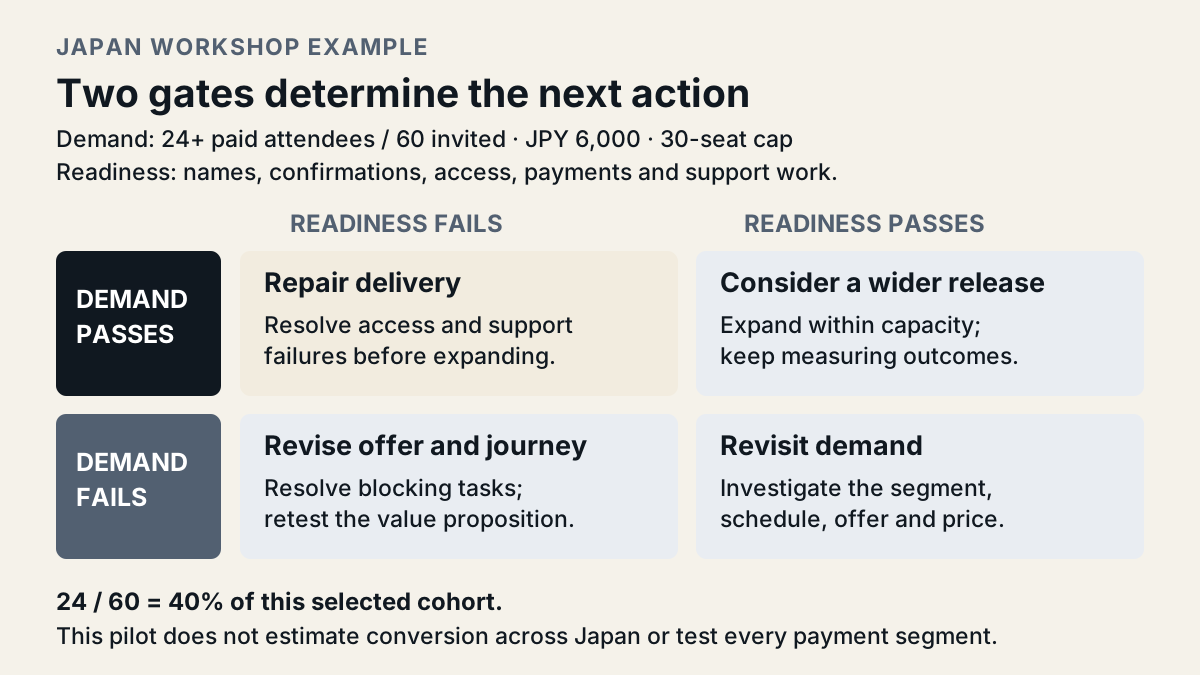
For the exercise, assume management chooses 24 paid attendees as the pilot target for considering repeat sessions. Invite 60 qualified prospects with the price and conditions visible. Count people who pay and attend, then measure usefulness after the class. Twenty-four of sixty is 40% of this selected cohort, not a forecast of Japan-wide conversion. At the 30-seat limit, record further interest separately; a waitlist is not paid attendance.
Operating readiness needs separate evidence: successful name handling, accurate confirmations, clear payment status, an accessible joining link and a rehearsed refund process. Assume one trained support person covers the published hours around the class, with an escalation owner available for access failures. Test that arrangement before promising it. Strong purchase interest cannot compensate for customers being unable to join a paid session.
Present a learning plan that can change the recommendation
Use the first week to observe the twelve participants and correct the blocking language, name and cancellation problems. Retest those tasks with new participants to check whether the revised journey works without explanation. In parallel, have payments and support owners confirm what can operate within six weeks.
Aim to finish retesting and operational rehearsals by week three, allowing a limited paid session in week four or five if the checks pass. Record acquisition source, payment method, attendance, help requests and feedback on the class itself. If the session fills but support cannot resolve access problems, repair delivery before expanding. If the journey works yet paid attendance falls short, revisit the segment, value proposition, schedule or price before translating a larger catalogue. Bring those findings and remaining dependencies to the week-six decision.
Prepare for three follow-ups: What would move cash payments ahead of other work? Which result would stop the launch? What remains unknown after a successful pilot? Answer each with evidence that changes an action, and identify whether the uncertainty concerns demand or delivery.
For example, cash payments move earlier if customers who accept the offer and price repeatedly cannot buy by card, and an eligible alternative can operate in time. A preference mentioned in an interview alone does not establish that priority.
Practise a two-minute recommendation for this workshop: choose the first three changes, defer one request and name both launch gates. Then change the audience to employer-funded learners and explain which assumptions need new research. Explore Elite Interview Guide's interview preparation services for your next preparation step.