In a banking interview about a Japanese tender offer, establish what is being bought, which price the premium uses, and what must happen before payment. A large premium can coexist with a demanding valuation; a small premium to the latest share price can reflect an offer already anticipated by the market. Neither percentage answers whether the transaction is attractive or likely to complete.
For candidates in China, Taiwan and Southeast Asia preparing to discuss Northeast Asian deals in English, the useful skill is translating an issuer announcement into a commercial argument. Start with the actual terms before applying a familiar M&A template. Here, a tender offer means a bidder offering to purchase shareholders' stock; the target company's disclosure should not be confused with the company buying back its own shares.
Read the terms as a transaction, not a headline
Toshiba's 2023 transaction provides a concrete reading exercise. Its August shareholder letter listed JPY 4,620 per share, an August 8–September 20 offer period, September 27 settlement commencement, and a minimum purchase quantity of 288,731,000 shares. Below that minimum, no tendered shares would be bought. Each field answers a different question: consideration, acceptance window, payment timing and a condition for proceeding. Toshiba and TBJH, August 2023 shareholder letter.
This offer has ended. Toshiba reported on September 21, 2023 that 340,459,163 shares had been tendered, exceeding the minimum. The results listed no maximum purchase limit and described further planned steps because the tender had not acquired all shares. A successful tender and complete ownership were therefore separate milestones. Toshiba, September 2023 results.
Build a short terms sheet with separate rows for the bidder, shares covered, cash or stock consideration, existing ownership, minimum and maximum quantities, conditions, deadline, settlement and intended subsequent steps. Preserve the document's units and definitions. “Shares outstanding,” “shares eligible for purchase” and voting rights may have different denominators. Treat thresholds as terms to read from that transaction, rather than numbers to transfer automatically between jurisdictions.
Ask what each premium actually measures
Toshiba's August 7 opinion announcement reported three very different premiums for the same JPY 4,620 price: 20.63% against the April 6, 2021 close of JPY 3,830; 9.43% against the March 22, 2023 close of JPY 4,222; and 0.94% against the August 4, 2023 close of JPY 4,577. The earlier reference date preceded the announcement of an initial acquisition approach. Toshiba, August 2023 opinion announcement.
The analytical lesson is to label the date and its reason. An unaffected price is a reference chosen to exclude the transaction's anticipated effect. The day before formal launch may already reflect months of discussion. Conversely, an old price may exclude deal speculation while also predating major changes in earnings or markets. Explain that tradeoff instead of selecting whichever date makes the offer look most generous.
A recent trading average smooths daily volatility but can still include takeover expectations. A valuation range answers a further question: what cash flows, assets and risks could justify the price? It does not become comparable to a premium simply because both appear in the same announcement.
Work through one yen-denominated example
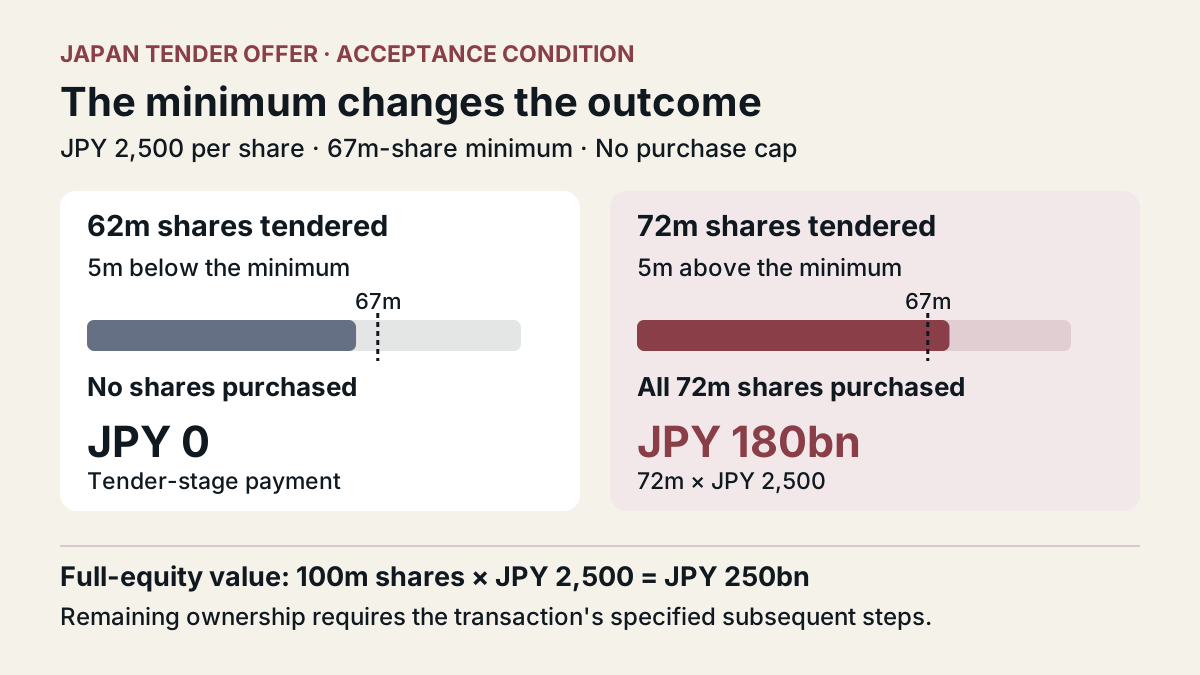
Suppose a Singapore-based buyer offers JPY 2,500 per share for a Japanese components manufacturer serving customers in Taiwan and Southeast Asia. Assume 100 million eligible shares, no bidder stake, treasury shares or dilutive securities, a 67 million-share minimum, and no purchase cap. The minimum is an assumption for this exercise. With all other conditions satisfied, no shares are purchased below it; once it is met, every tendered share is purchased.
Assume the following reference points, with all prices in yen per share:
| Reference | Value | Comparison with JPY 2,500 |
|---|---|---|
| Close before the first credible deal report | 2,000 | 25.0% premium |
| One-month average ending on that date | 2,200 | 13.6% premium |
| Latest price after the offer announcement | 2,425 | 3.1% premium |
| Standalone equity valuation range | 2,300–2,850 | Offer lies within the range |
Calculate each premium as offer price ÷ reference price − 1. The 25% figure measures the offer against the selected pre-report close. The 3.1% figure measures the remaining difference from the latest trading price. Calling both “the acquisition premium” without dates conceals the question each calculation answers.
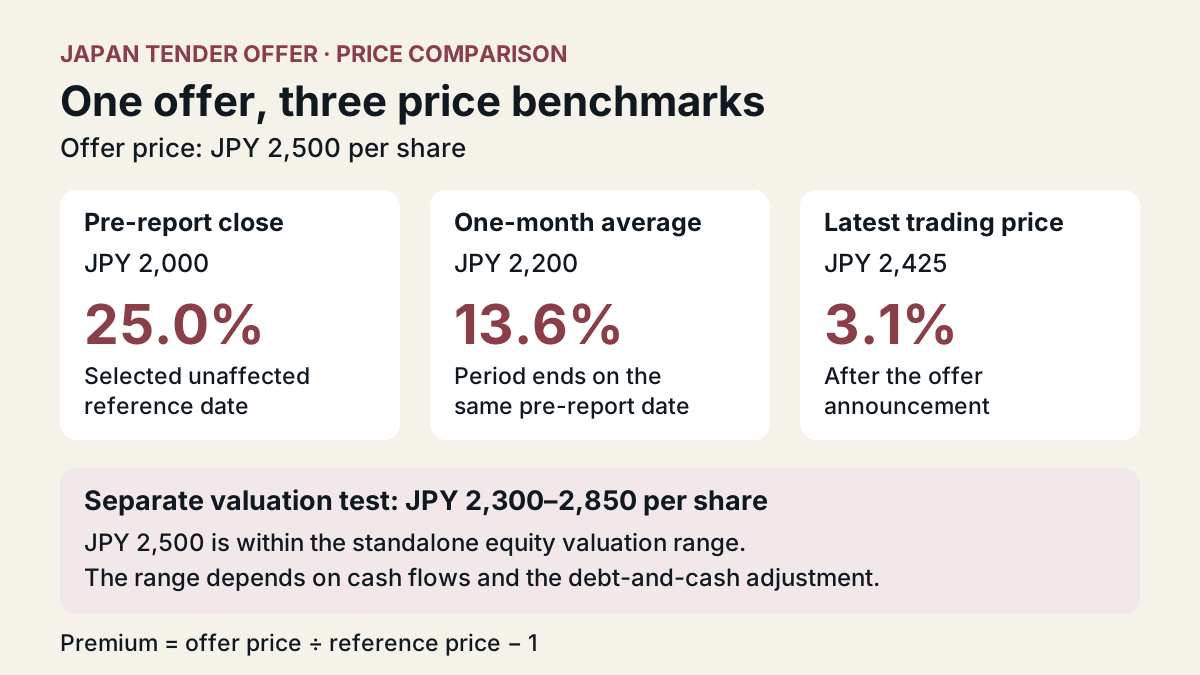
Suppose the valuation range comes from a discounted cash flow analysis. This first estimates enterprise value from expected operating free cash flows; adding cash, subtracting debt and dividing by shares produces equity value per share, assuming no other adjustments. The standalone range excludes buyer-specific synergies. Ask which operating assumptions produce its endpoints: customer demand, achievable margins and required investment. Overseas customers matter through those assumptions; their location does not itself justify a higher multiple.
The offer values all 100 million shares at JPY 250 billion. If debt is JPY 40 billion and cash is JPY 15 billion, implied enterprise value is JPY 275 billion, assuming no other adjustments. Keep enterprise value separate from the amount paid to selling shareholders; the next question is how many shares the tender actually buys.
Connect acceptance conditions to the cash requirement
If only 62 million shares are tendered, the assumed minimum is missed and the buyer purchases none. If 72 million are tendered, the condition is met and tender-stage consideration is 72 million × JPY 2,500 = JPY 180 billion. The JPY 250 billion full-equity value is not the same as the tender-stage payment. Acquiring the remaining ownership would require whatever subsequent process and consideration the transaction documents specify.
Keep launch conditions, acceptance conditions and settlement dates separate. For a live deal, establish which conditions have already been satisfied and which remain outstanding. A board recommendation does not by itself establish that enough shareholders will tender. A stated deadline does not mean payment arrives that day.
Deliver a conclusion that can survive follow-ups
A concise answer to the hypothetical is: “The offer carries a 25% premium to the selected unaffected close, but sits within the standalone valuation range. I would test the operating assumptions behind that range and the ability to reach 67 million acceptances. At 72 million tendered shares, tender-stage payment is JPY 180 billion; full ownership requires further steps.”
Prepare for three extensions. If the latest price rises above the offer, investigate explanations such as expectations of a higher bid rather than declaring completion certain. If the buyer funds in Singapore dollars, assess the yen purchase obligation at the assumed exchange rate and any hedging terms. If an English translation differs from the Japanese original, identify the controlling document; Toshiba's results explicitly gave the Japanese version precedence.
For your next practice session, produce a one-page terms sheet and a 90-second recommendation using the hypothetical numbers. Change acceptances from 72 million to 62 million and explain exactly what changes. Use Investment Banking Interview Prep to connect this transaction discussion with your wider technical preparation.