
At 11:47 p.m., you have three tabs open: an unfinished application, a case-math sheet you still do not trust, and a WhatsApp chat asking if anyone can run a mock tomorrow. You will not perfect all three tonight. The useful question is which gap can actually stop you at the next gate—and what you can still fix before your office’s real deadline.
This guide gives you two things: a red-amber-green triage for finding the blocker, and a 14-day sequence that keeps application work, cases and fit preparation from competing for every free hour.
First, stop treating Southeast Asia as one recruiting calendar
BCG’s current international opportunities page groups Bangkok, Ho Chi Minh City, Jakarta, Kuala Lumpur, Manila and Singapore under Southeast Asia, but it still tells candidates to check local pages because eligibility, availability and timelines differ. Its current guidance also distinguishes year-round Associate applications from campaign-based Summer Associate applications.
McKinsey’s campus deadline finder asks candidates to locate the deadline that applies to their academic programme and office. That is the right mental model: the firm name is not enough. You need the exact office, role, degree status, school route and application system.
Before touching your CV again, record five fields:
| Field | What to write down | Why it changes your plan |
|---|---|---|
| Office | Singapore, Jakarta, Kuala Lumpur, Bangkok, Manila or Ho Chi Minh City | Language, staffing model and application route can differ |
| Role | Associate, Summer Associate, Consultant or another named role | Eligibility and interview timing are not interchangeable |
| Candidate route | Local school, overseas school, MBA or experienced hire | The same office may use different campaigns |
| Official deadline | Date, time zone and URL | A remembered “October deadline” is not a submission plan |
| Next likely gate | CV screen, assessment, case or fit interview | This tells you where the next hour has the highest value |
BCG’s Southeast Asia roles page has also used different instructions for US-based, UK-based, international and local schools, including how office preferences should be aligned. Read the route you actually belong to; do not combine instructions from two routes into a third one that does not exist.
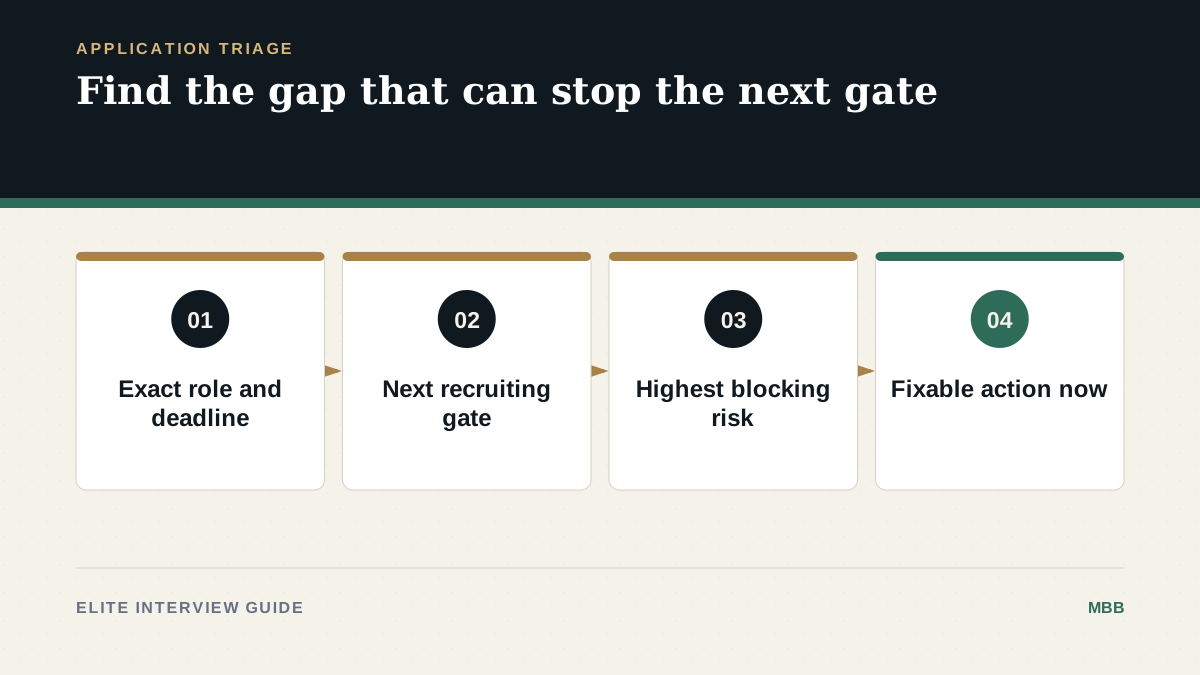
The application-stage × blocking-risk matrix
Use evidence from the last seven days. Anxiety is not evidence; neither is one unusually good practice case.
| Next gate | Red: can stop you now | Amber: weak but usable | Green: move on |
|---|---|---|---|
| CV screen | Wrong role or dates; unexplained gap; bullets do not show what you did; office story contradicts application | Relevant experience is present but buried; impact is vague in several bullets | One-page narrative is coherent; strongest evidence is easy to find |
| Online assessment | You have not checked the format or technical requirements; practice attempts break because you misread instructions | Timing is uneven, but you can complete representative practice unaided | You understand the rules and can work accurately under the stated conditions |
| First case | You cannot structure the decision, interpret a chart or recover after a prompt | Core method is sound, but one repeatable weakness costs time | Two recent full cases show consistent structure, math and synthesis |
| Fit / personal experience | No specific example; your role is unclear; the story does not answer the question | Good event, loose sequencing or thin reflection | Concrete actions, tension, result and learning fit in a natural answer |
The rule is simple: fix one red item before polishing three amber ones. If your CV has the wrong graduation date, a fourth market-sizing drill is procrastination. If the application is credible but you have never completed a full case, another evening adjusting margins is also procrastination.
Diagnose the next gate, not your entire candidacy
The official McKinsey interviewing page currently separates the personal-experience discussion from the problem-solving interview. That distinction matters. “I am bad at interviews” is too broad to train. “My recommendation loses the case logic after the interviewer adds a constraint” is trainable.
Ask four narrower questions:
- What will the firm see next? If you have not submitted, the answer is your application—not your most difficult case type.
- What evidence says this is weak? Use a rejected CV review, timed attempt, recording or mock transcript. Do not diagnose from mood.
- Can it move materially in 48 hours? A vague bullet can. Business Mandarin cannot move from beginner to interview-ready in a weekend.
- What is the minimum credible standard? Credible means accurate, coherent and ready for the next gate; it does not mean endlessly polished.
Two candidates, two different priorities
The examples below are composites created for training. They are not candidate testimonials or claims about any firm’s selection decision.
Candidate A: Singapore university, local internship, deadline confirmed
Her CV is structurally sound and the application closes later in the campaign. In two full cases, however, she reaches the right number and then waits for the interviewer to explain its meaning. Her fit story is specific but runs for three minutes.
Her order should be: submit after one factual CV pass; spend most practice time on case synthesis; compress one fit story after listening to a recording. Rewriting every CV bullet for another week would protect the task she already does reasonably well.
Candidate B: overseas university, choosing among Jakarta, Kuala Lumpur and Singapore
His case practice is solid, but his application lists three offices without explaining where he can work, what language he can use professionally or why each preference fits. He has copied an application date from an older campus sheet.
His first 48 hours should be office and eligibility research. He should confirm live roles, the correct school route and language expectations, then choose preferences he can defend. Only after that should he spend the remaining time on cases. A polished case will not repair an incoherent office choice at the screen.
A 14-day plan that forces trade-offs
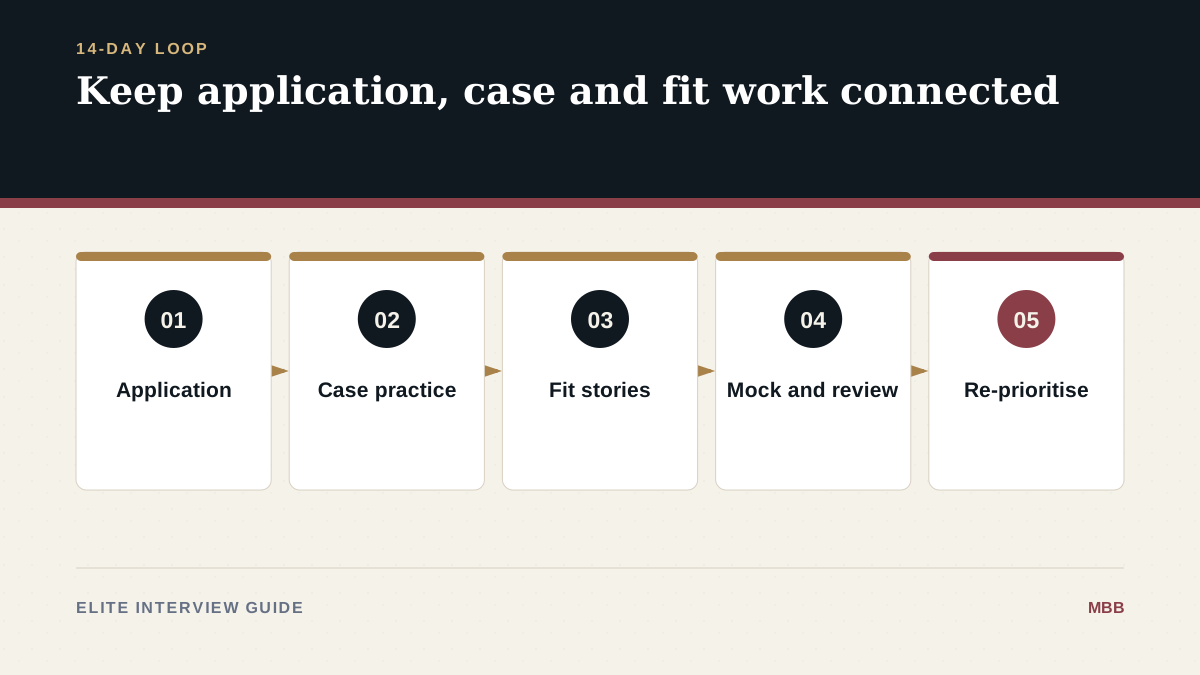
| Day | Main job | Proof that you finished |
|---|---|---|
| 1 | Verify office, role, eligibility, deadline and route | Five-field record with live links and access date |
| 2 | Run the red-amber-green diagnostic | One blocker selected; everything else parked |
| 3–4 | Repair the blocker | Revised CV, completed assessment setup, or targeted case drill |
| 5 | Complete one full case and record one fit answer | Recording or transcript, not a memory of how it felt |
| 6 | Review failure moments | Three timestamped notes: what happened, why, next drill |
| 7 | Submit if the application is now credible | Confirmation saved; live deadline checked again |
| 8–9 | Drill the narrow case weakness | Two short drills plus one clean reattempt |
| 10 | Build two fit stories | Each answers a different prompt with specific actions |
| 11 | Complete a second full case | Recommendation includes answer, evidence, risk and next step |
| 12 | Simulate the likely first round | Correct length, tools and interruptions |
| 13 | Repair only repeated errors | No new framework collecting |
| 14 | Final simulation and recovery plan | One full run plus a plan for the first question that goes badly |
If your verified deadline falls inside this plan, compress the sequence; do not pretend the calendar moved. Complete factual and eligibility checks first, repair the single credibility issue that could stop the application, submit, and continue preparing for the next gate.
Your 48-hour decision
Write one sentence before you close this page:
My next gate is ______. The strongest evidence that ______ is my blocker is ______. In the next 48 hours I will produce ______.
That sentence is more useful than a plan to “work on CV, cases and fit.” It gives tomorrow’s session a finish line.
Sources
- BCG International Opportunities — current Southeast Asia offices, broad application windows and language notes.
- BCG Southeast Asia Open Roles — candidate-route and office-preference instructions.
- McKinsey Campus Application Deadlines — official deadline finder.
- McKinsey Interviewing — current description of personal-experience and problem-solving interviews.