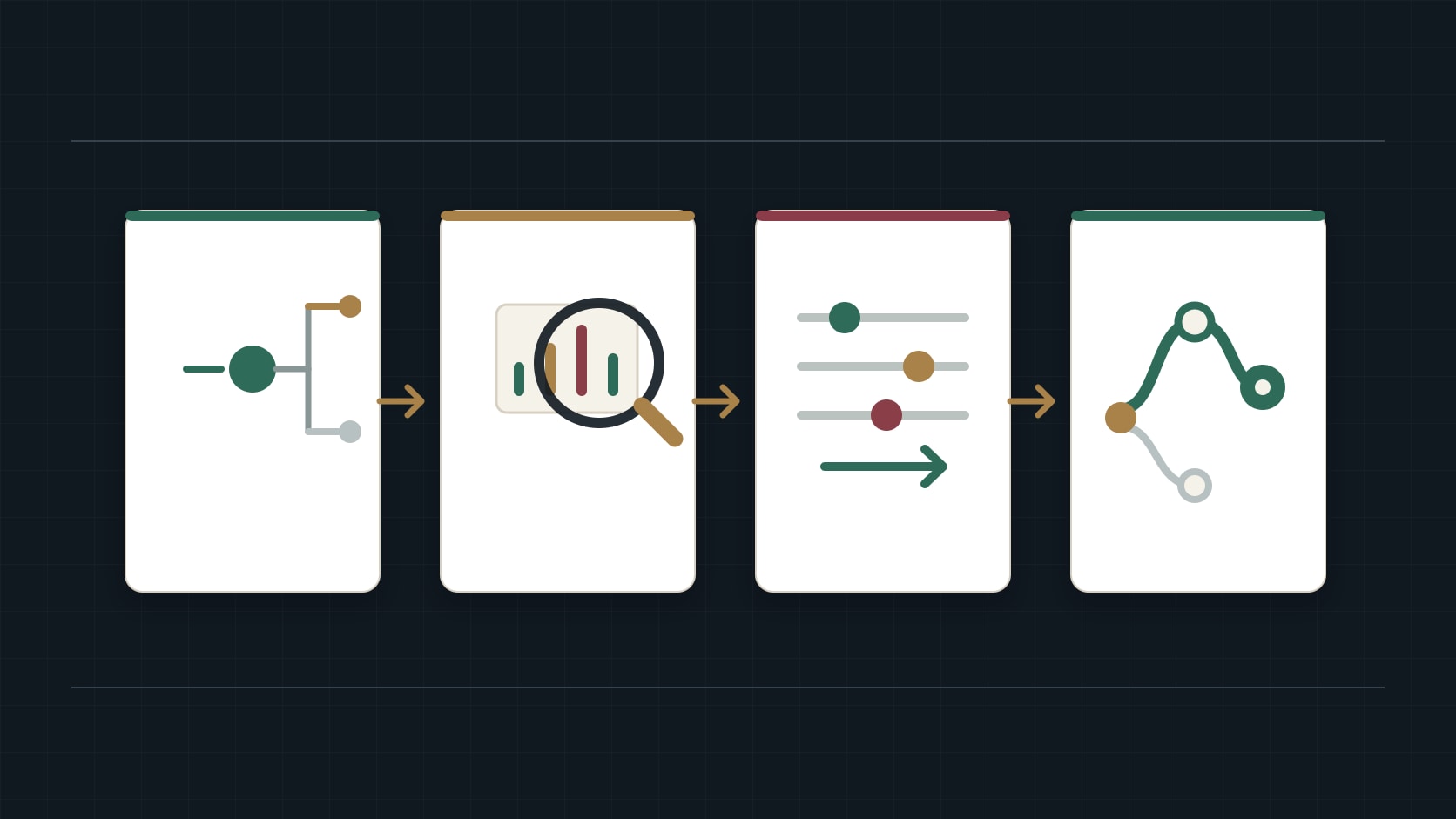
Halfway through a case, the interviewer gives you data that conflicts with your initial view. Your next question is: Which part of my reasoning does this evidence change, and what should I test next?
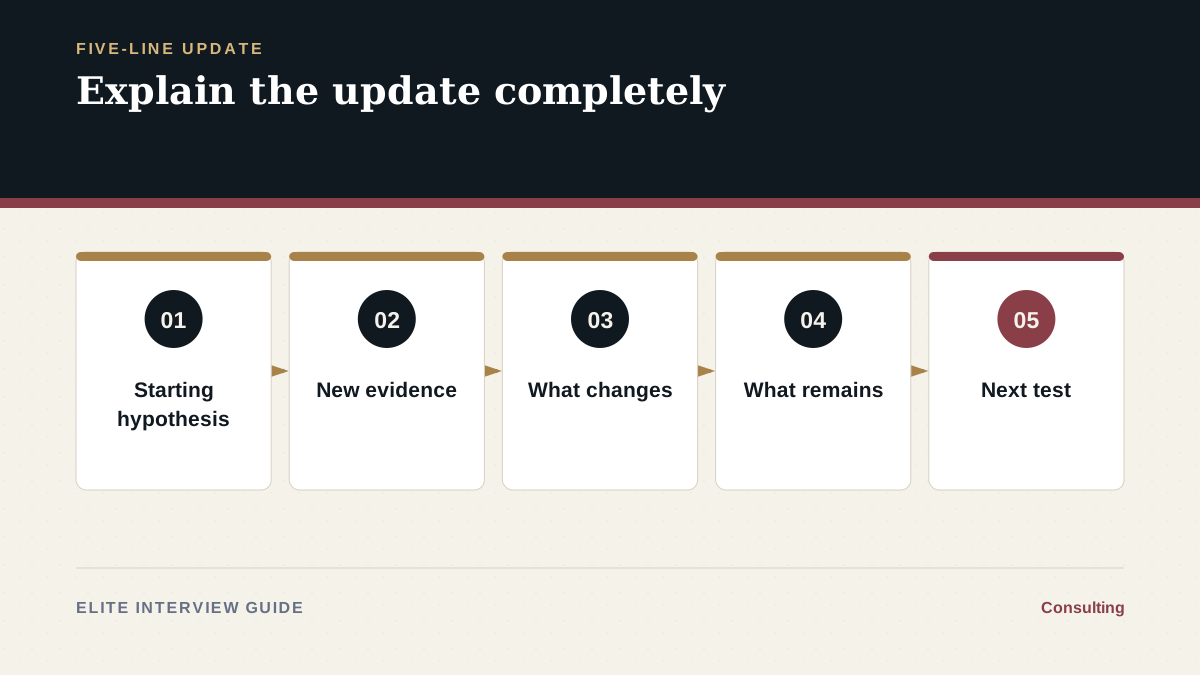
Use a five-line update: starting hypothesis / new evidence / what changes / what remains / next test. A hypothesis gives you an initial order of analysis. New evidence can change that order.
Make your hypothesis testable
McKinsey’s public interview guidance describes its Problem-Solving Interview as a business case used to assess analytical thinking and the approach to complex problems. Deloitte’s case and scenario guidance emphasizes clarifying the issue, explaining assumptions and reasoning, and structuring the analysis. McKinsey / Deloitte
For practice, attach a test to each hypothesis. Consider this exercise developed for this article: a restaurant chain wants to understand why profit has fallen across the same group of locations, and your first hypothesis is weaker demand.
An early conclusion might be: “Profit is down, so the chain is probably losing customers.” A testable version is: “I’ll first check whether demand has weakened. If order volume has fallen across comparable locations, I’ll investigate that branch. If volume is stable, I’ll move costs and customer mix higher in the analysis.”
Both start with demand. The second explains what would change your view. You can also identify what needs clarification: “Are we comparing the same locations, and is profit measured on the same basis?”
Check whether the contrary evidence is comparable
“The number of orders hasn’t fallen” is useful evidence, but first check whether it answers your original question.
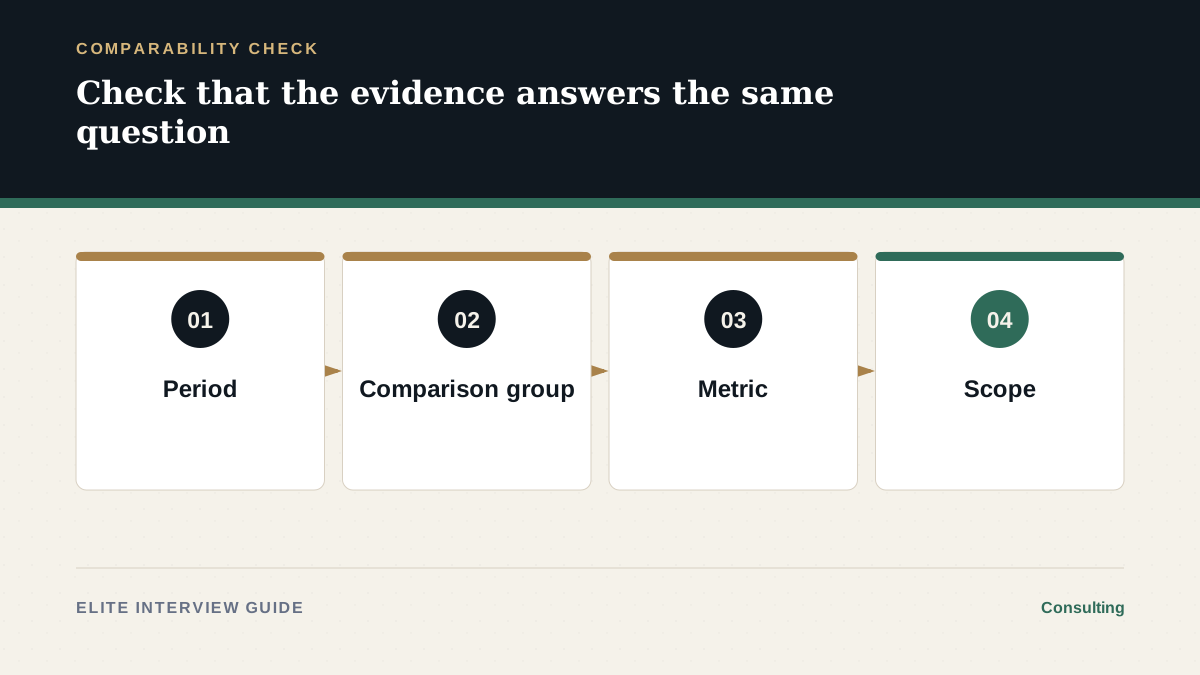
- Same period? Stable full-year orders do not settle whether demand weakened in the latest quarter.
- Same comparison group? Total orders may rise because new locations opened, even if existing locations weakened.
- Same metric? Order volume, customer count, and average spend per order answer different questions.
- Same scope? A stable total can contain growing and declining customer segments.
Ask the clarification that could change your decision; you do not need to recite every possible data issue. If the interviewer confirms the same period and comparable locations, you can say: “That evidence weakens the hypothesis that fewer orders are the main cause. I’ll reduce its priority.”
Explain the update in five lines
Continue the exercise. The interviewer confirms that order volume and revenue are stable across the same locations and period, while total costs for those locations have risen.
| Line | What you could say |
|---|---|
| Starting hypothesis | I first wanted to test whether weaker demand explained the profit decline. |
| New evidence | Orders and revenue are stable for comparable locations in the same period, while total costs for those locations are rising. |
| What changes | I’ll reduce the priority of declining orders and first break down the increase in costs. |
| What remains | The goal is still to explain the profit decline for those locations, and customer-segment differences remain untested. |
| Next test | I’d compare purchase prices, material usage, and staffing to identify where the increase is concentrated. |
You can deliver the update as one connected answer: “The current data does not support fewer orders as the main cause. Rising costs are the more direct lead, so I’ll investigate them first. I’ll keep customer-segment differences open because the aggregate data hasn’t answered that question.”
Match the strength of your language to the evidence. Reducing a branch’s priority is different from ruling it out. Aggregate data does not establish that every customer segment is performing well.
Practise three changes of direction
These exercise cards use illustrative scenarios. For each one, state a testable hypothesis, read the evidence, and deliver a five-line update.
Demand moves down the list. You initially suspect weaker demand. Comparable locations show stable orders and revenue, but falling profit for that same group. Move cost analysis up the list and keep segment-level demand differences open until you have a breakdown. Ask: “Which cost categories increased within the comparable scope?”
The suspected cost driver changes. You suspect supplier price increases. Comparable input prices are stable, while material usage rises. Shift attention to usage, waste, and product mix, while retaining cost categories you have not examined. Ask: “Where is the increase in usage concentrated by location or product?” Stable purchase prices address the price hypothesis; they do not establish waste as the cause.
Customer mix changes the average. You suspect widespread discounting has reduced average spend per order. Average spend within each customer segment is stable, but lower-spend segments represent a larger share of orders. Investigate the mix shift and each segment’s contribution, while keeping the original profit question in view. Ask: “Which segment shares changed, and how do revenue and costs compare across them?” A falling overall average does not mean every segment’s average fell.
Give yourself one minute to make the update
Practise answering: “The new data conflicts with your initial hypothesis. How will you adjust your analysis?”
Choose a card and record an answer of roughly one minute. Listen for five things: a clear starting hypothesis, specific evidence, a change no broader than the evidence supports, an explicit statement of what remains open, and a next question that advances the analysis.
For a second round, ask your practice partner to change one part of the data definition—for example, replace “comparable locations” with “all locations.” Reconsider comparability before choosing whether to change direction.
Next, apply the same five-line template to a case you are already practising. Record the order of tests before and after each update. You can also use it alongside TW-C-06’s market-sizing exercise, once you have an initial analytical structure. When discussing your preparation with Elite Interview Guide, bring your starting hypothesis, the evidence that changed it, and your next test.