In a Taiwan program manager interview, turn a supplier delay into a launch decision by tracing the dependent work, recalculating the completion date and comparing feasible recovery options. State what must be true for each option to work. Finish with the approval needed, an accountable owner and a trigger for changing the plan. More meetings or extra staff matter only if they change those dependencies.
Define what “launch” means before calculating the delay
Suppose you manage a hardware launch from Taiwan. Circuit boards come from Shenzhen, assembly and testing happen in Taiwan, and a Singapore commercial team coordinates regional release. At Day 0, the supplier revises board arrival from Day 8 to Day 12. Your sponsor asks whether the Day 24 commitment can survive.
First clarify the commitment: in this example, launch means the first saleable batch is cleared for dispatch after testing and release approval. It does not mean a press announcement or arrival at every customer's premises. Assume required market approvals and downstream delivery arrangements are already in place; otherwise, add them to the schedule.
This attention to supplier constraints fits the regional context. TSMC's 2024 annual report discusses limited equipment suppliers, long delivery cycles and supplier contingencies. That disclosure concerns TSMC's operations. The useful question for this hardware exercise is which supplier promise actually controls your own milestone.
Draw the dependency chain using one calendar
Use elapsed working days throughout. Day 0 is when planning begins; a two-day activity starting at Day 8 finishes at Day 10, and its successor can start then. Assume one shared working calendar, no holidays, sufficient resources and immediate access to each booked facility. In a real regional plan, confirm the factory calendar, transport cutoffs and receiving hours at each location.
The remaining work is:
- Assemble the boards: two days after arrival.
- Finish firmware: ready at Day 10, independently of board arrival.
- Integrate hardware and firmware: five days, starting only when both are ready.
- Run reliability testing: six days after integration.
- Complete the release gate: three days after reliability passes.
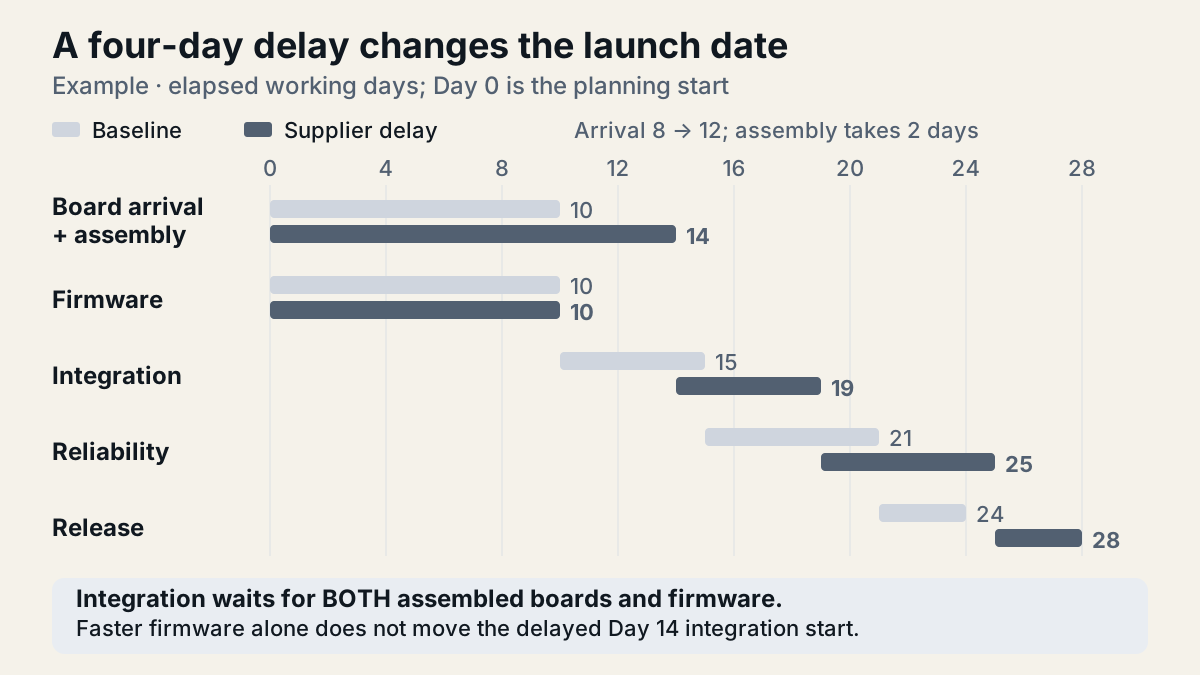
Originally, assembly finishes at Day 10. Integration therefore runs from Day 10 to 15, reliability from Day 15 to 21, and release from Day 21 to 24. With arrival at Day 12, assembly finishes at Day 14; the subsequent completion dates become Days 19, 25 and 28. The supplier's four-day delay produces a four-day launch delay under these assumptions.
Microsoft's explanation of the critical path describes the dependent tasks that control the finish date. Here, after the revised arrival, board arrival and assembly determine when integration starts. Finishing firmware at Day 8 instead of Day 10 cannot move that Day 14 start. Firmware remains necessary, but accelerating it recovers no launch time.
Compare recovery actions by the days they actually recover
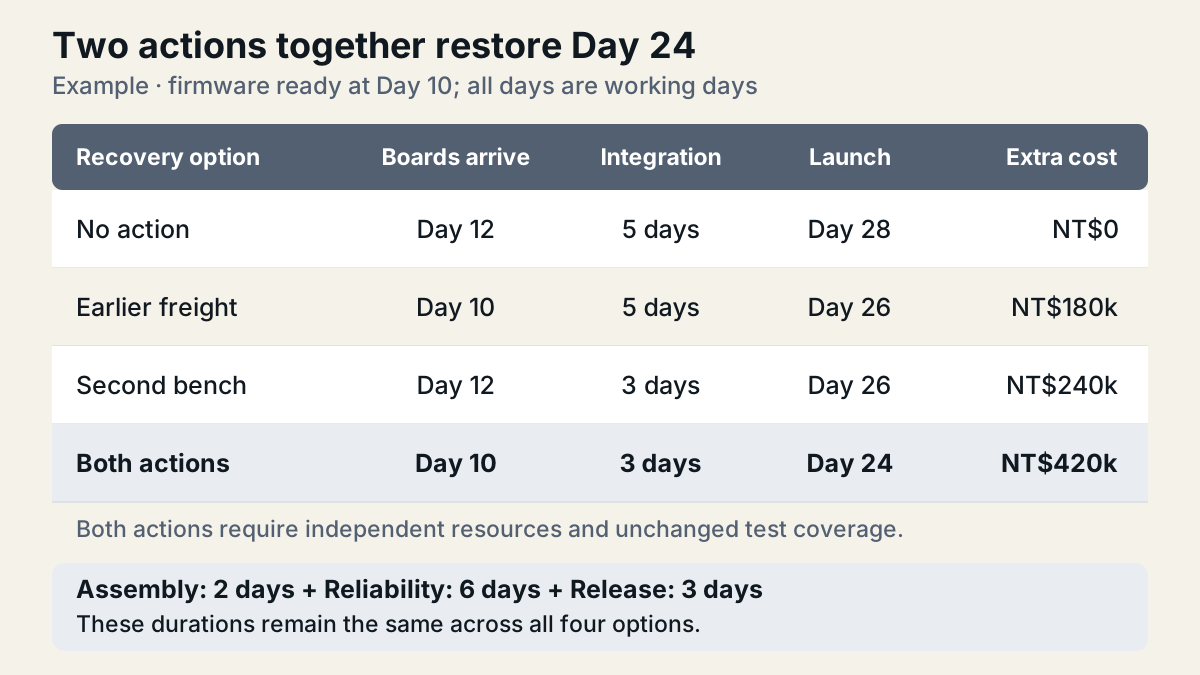
Ask where the delay occurs: fabrication, outbound processing or transit. Faster freight can help only if time remains recoverable after the boards are built. Suppose logistics confirms an earlier shipment that brings the entire required batch to the Taiwan receiving point at Day 10 for an extra NT$180,000. That estimate includes transport and clearance; an earlier departure alone is insufficient. Assembly then finishes at Day 12, producing a Day 26 launch. Freight recovers two days, not all four.
Engineering offers a separate option: a second staffed test bench allows independent integration checks to run simultaneously, reducing integration from five days to three for NT$240,000. Assume the technical lead confirms the same coverage, available equipment and independent staff. With boards still arriving at Day 12, launch again falls on Day 26.
Using both options produces assembly at Day 12, integration at Day 15, reliability at Day 21 and release at Day 24. Their NT$420,000 combined cost restores the target. The six-day reliability run remains intact. A fixed-duration reliability protocol cannot simply be shortened by assigning another engineer.
Connect the time saving to the business consequence. The GAO Schedule Assessment Guide links schedule slippage to cost and explains why an integrated schedule helps evaluate changes. Suppose finance estimates NT$150,000 of incremental, nonrecoverable cost per working day of delay, excluding mitigation spending. Assume all other costs stay unchanged. This daily loss needs validation; the product's daily revenue is not an adequate substitute.
The comparable totals are NT$600,000 for a four-day delay, NT$480,000 for freight plus two delayed days, NT$540,000 for the bench plus two delayed days, and NT$420,000 for both with no delay. On those inputs, the combined option has the lowest modeled cost. It still requires evidence that both actions are feasible and do not introduce unacceptable quality risk.
Put owners and decision triggers into the recommendation
Your executive update can be short: “The current forecast is Day 28 against a Day 24 commitment. I recommend approving NT$420,000 for earlier freight and a second integration bench. Together they restore Day 24 under the stated assumptions, with no remaining schedule reserve. I need confirmed arrival and staffed test capacity by Day 1 before we retain that external commitment.”
Make the checkpoint operational. Procurement owns written confirmation of receipt by Day 10. Engineering owns the three-day integration plan and unchanged coverage. The program manager owns the combined schedule; the sponsor approves spending and any revised launch commitment. Give the checkpoint a time and zone, such as Day 1 at 16:00 Taipei time, with a shared written decision for the Singapore team and supplier.
If either confirmation fails, update the applicable scenario immediately. With the other assumptions unchanged, one confirmed recovery action forecasts Day 26; neither forecasts Day 28. Recalculate again if the supplier cannot support even Day 12. Escalate the consequence before the Day 24 message goes out. Do not quietly retain the target and label the issue “under monitoring.”
Practise the follow-up that changes your answer
Ask what happens if the reliability slot is unavailable after a delay, the second bench shares the firmware engineer, or the earlier shipment contains only part of the required batch. Recheck the relevant dependencies before keeping the date or proposing a smaller launch. A supplier update is not complete until the downstream owners confirm its consequences.
For practice, redraw the combined plan with firmware ready at Day 13 instead of Day 10. Calculate the launch date, identify the new controlling dependency, and deliver a sixty-second recommendation with one approval and one fallback trigger. Then use Elite Interview Guide's interview preparation services to choose your next preparation step.